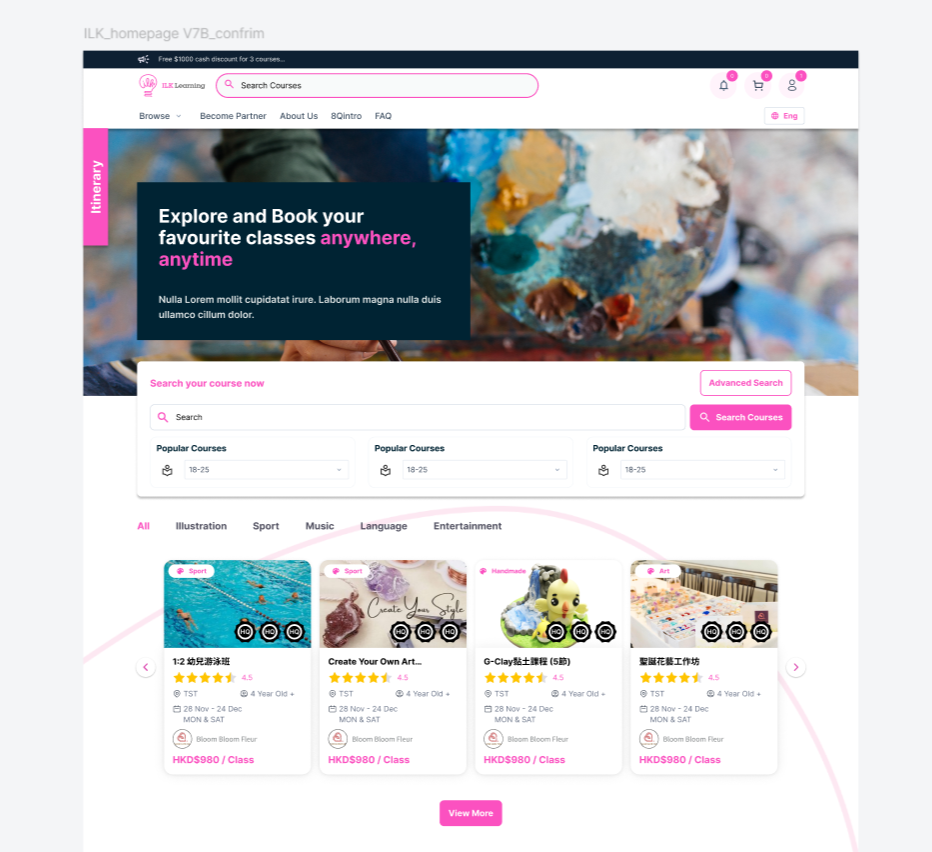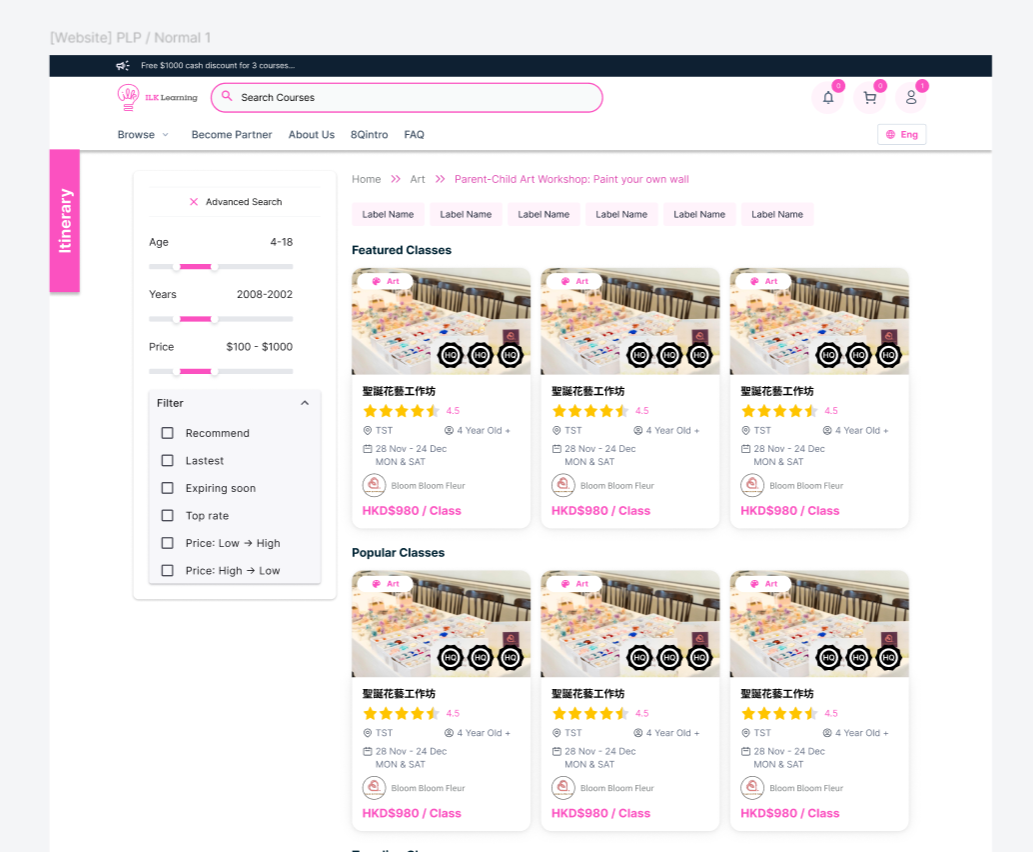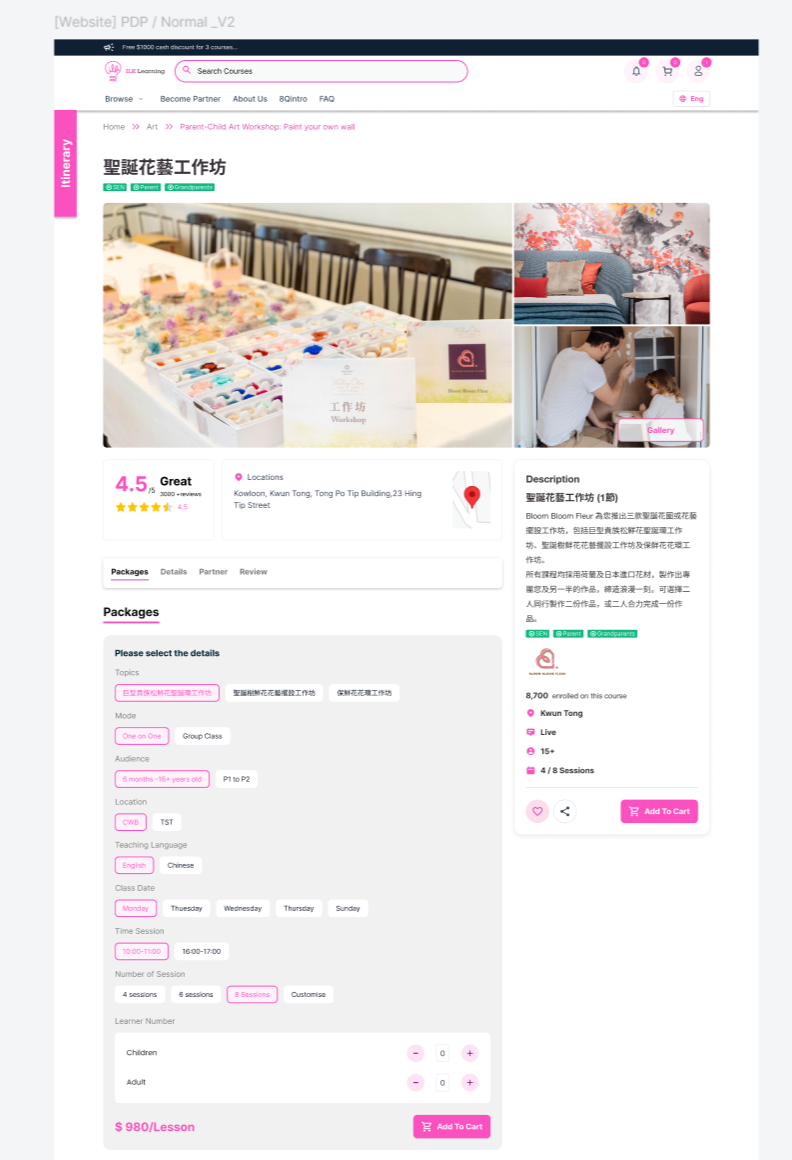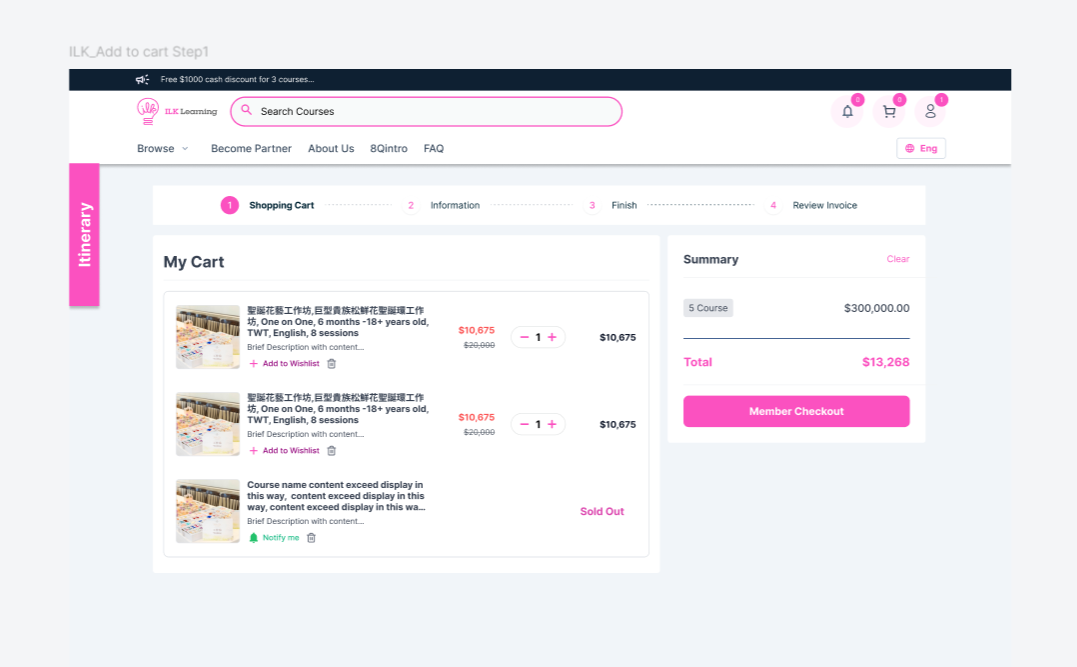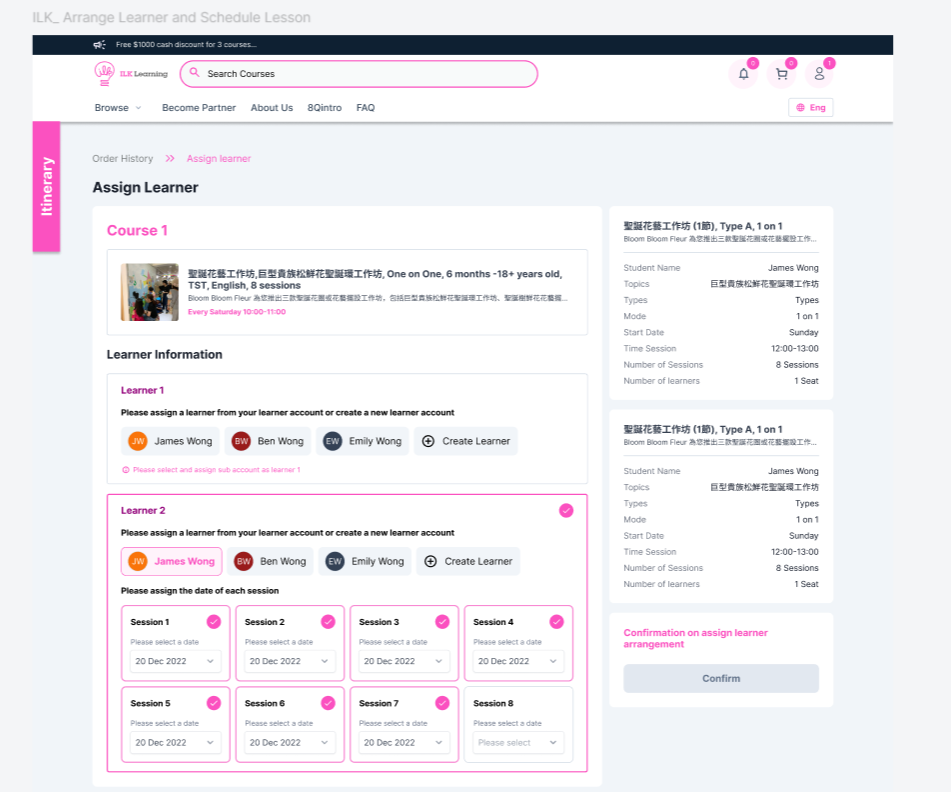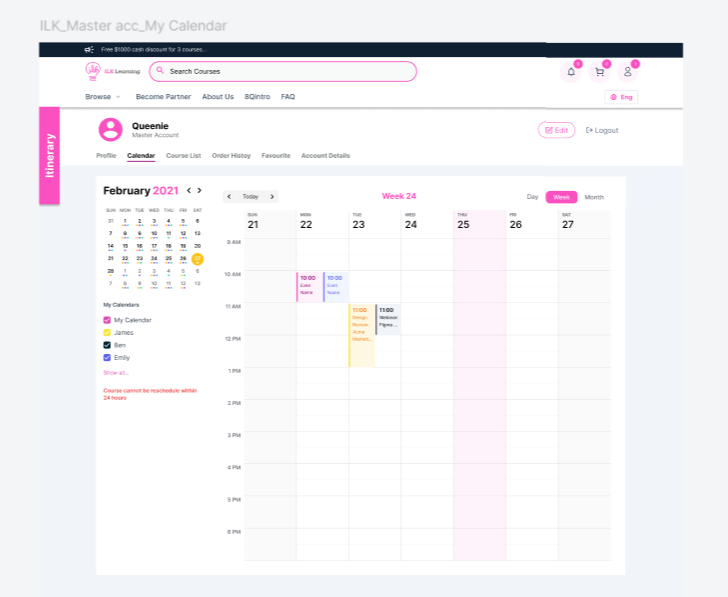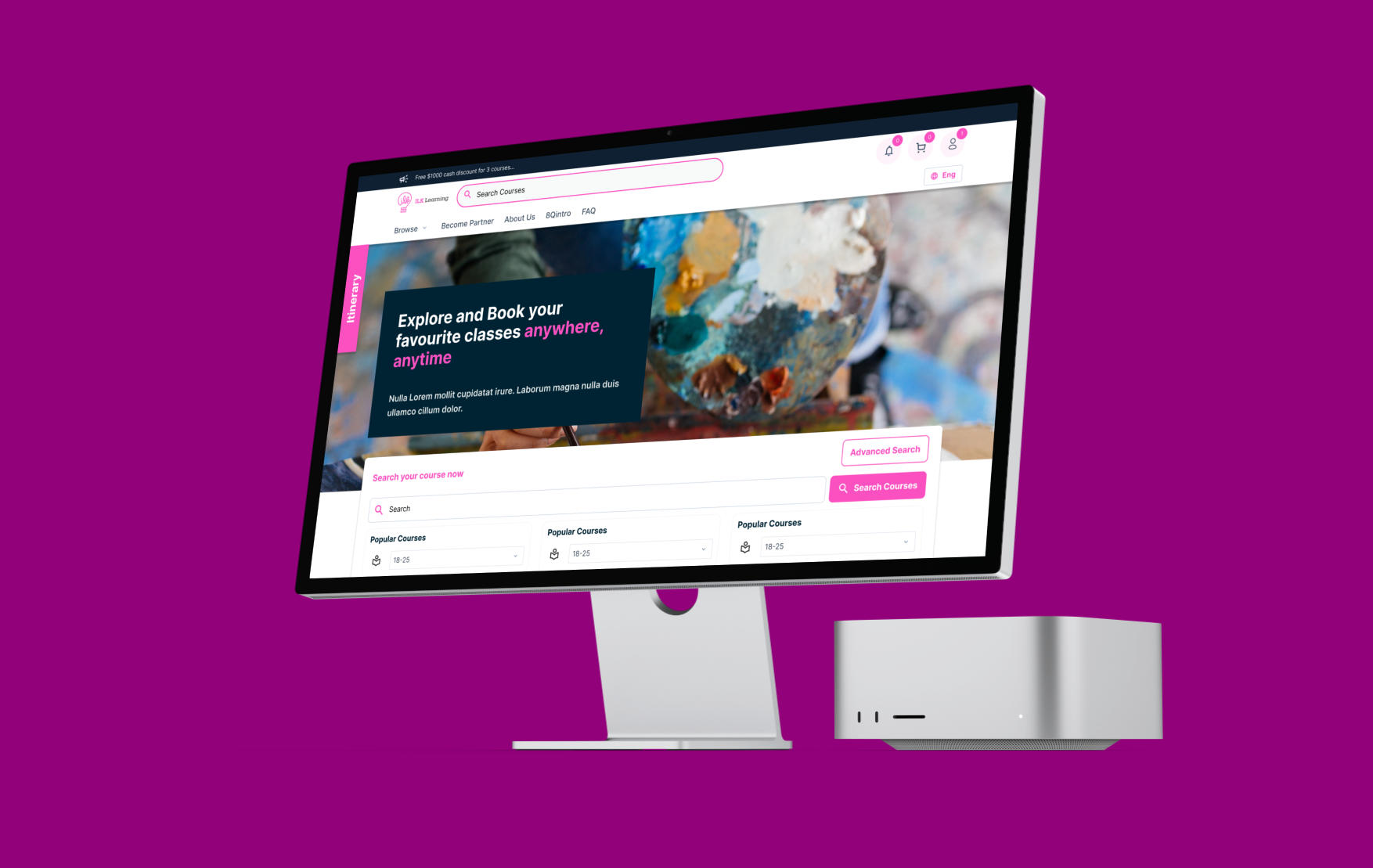
Designed the end-to-end experience for a dual-sided marketplace (B2C & B2B) connecting parents and schools with education providers. By introducing a unique "8-Quotients" framework into the search architecture, I shifted the user mental model from "buying classes" to "investing in child development," increasing cross-category engagement by 35%.
Explore and Book your favourite classes anywhere, anytime.
Context: Hong Kong parents are results-oriented but overwhelmed by choices. They don't just want "Fun" classes; they want measurable growth.
The Problem: Traditional directories list classes by topic (e.g., Piano), which fails to address the parent's underlying goal (e.g., "I want to improve my child's patience").
The Goal: Build an ecosystem that guides parents from "Discovery" to "Enrollment" using educational logic, not just keywords.
To move beyond a "directory" and create a "solution," I conducted 8 in-depth interviews with parents and analyzed the user flows of 3 major competitors. The goal was to understand the mental model behind how parents choose activities.
1. The "Keyword Paralysis"
Observation: Parents often don't know the specific class name (e.g., "Python Coding") but know the outcome they want (e.g., "Logical Thinking").
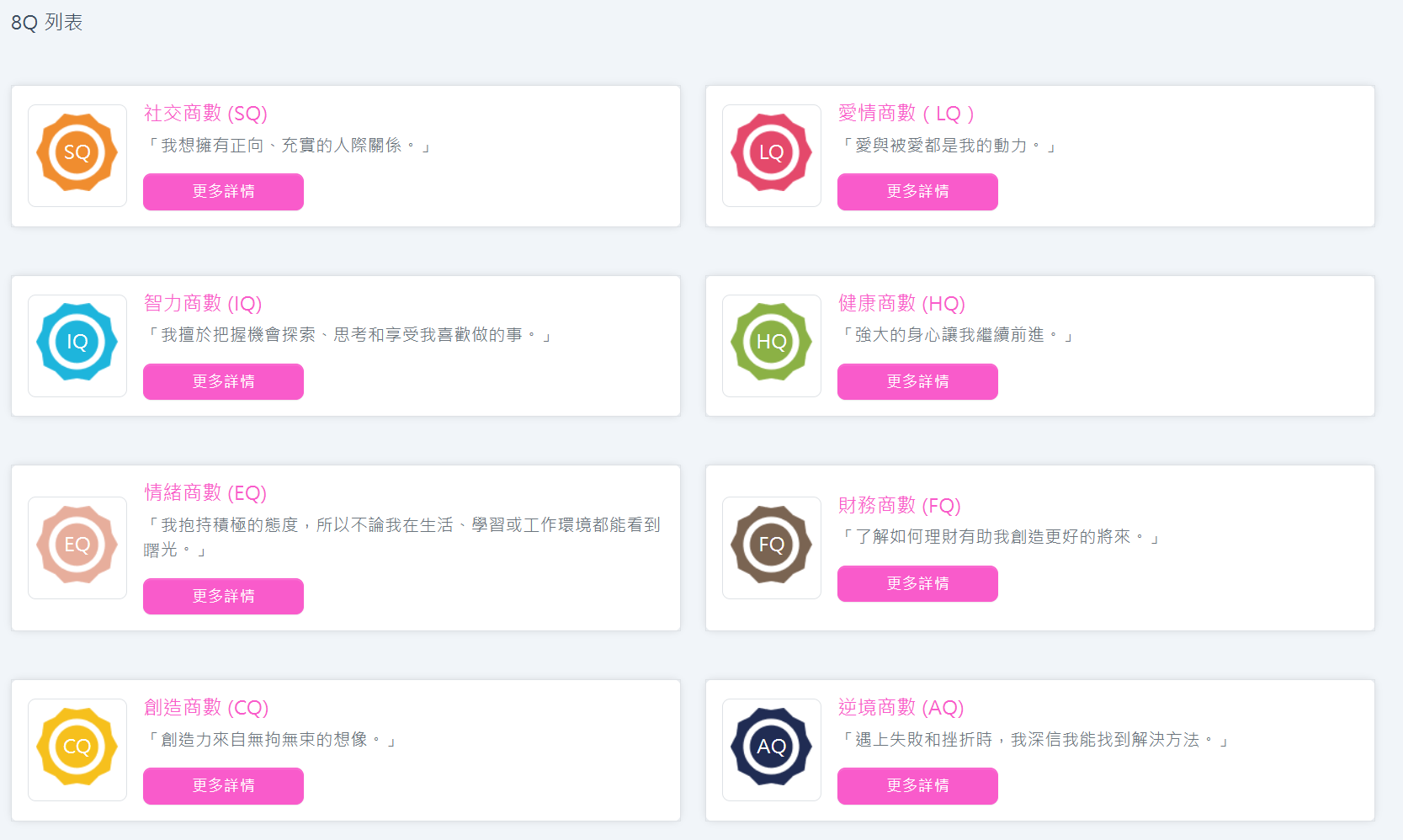
Impact: Standard search bars failed them. This validated the need for the "8 Quotients" (AQ, EQ, CQ) framework to bridge the gap between "Parental Goal" and "Course Name."
We audited generic booking platforms (like Eventbrite) and local directories. While they excelled at ticketing, they failed at education. They treated a "Kids' Class" the same as a "Concert Ticket"—lacking critical metadata like Age Appropriateness and Teaching Mode (Group vs. 1-on-1), which are deal-breakers for parents.
1. "Quotient-Based" Information Architecture
Instead of standard categories, I integrated the 8 Developmental Quotients (AQ, CQ, EQ, IQ, etc.) into the core navigation.
Design Rationale: This educates parents on the benefit of the class (e.g., "Rock Climbing" is tagged with AQ - Adversity Quotient), encouraging them to book diverse activities.

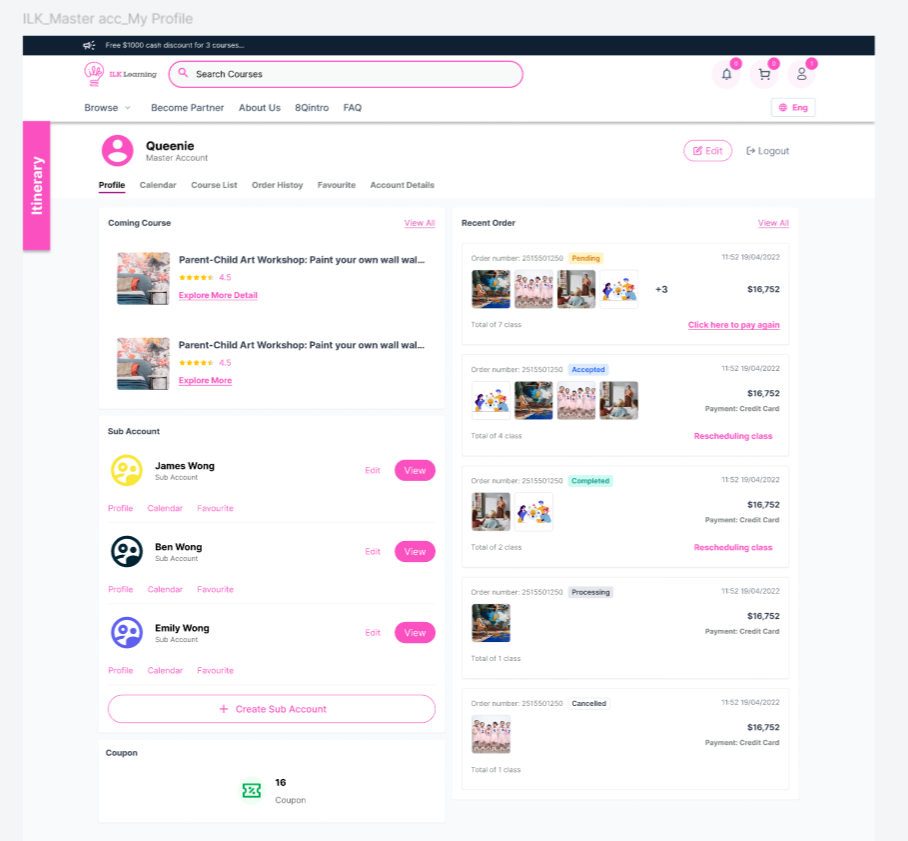
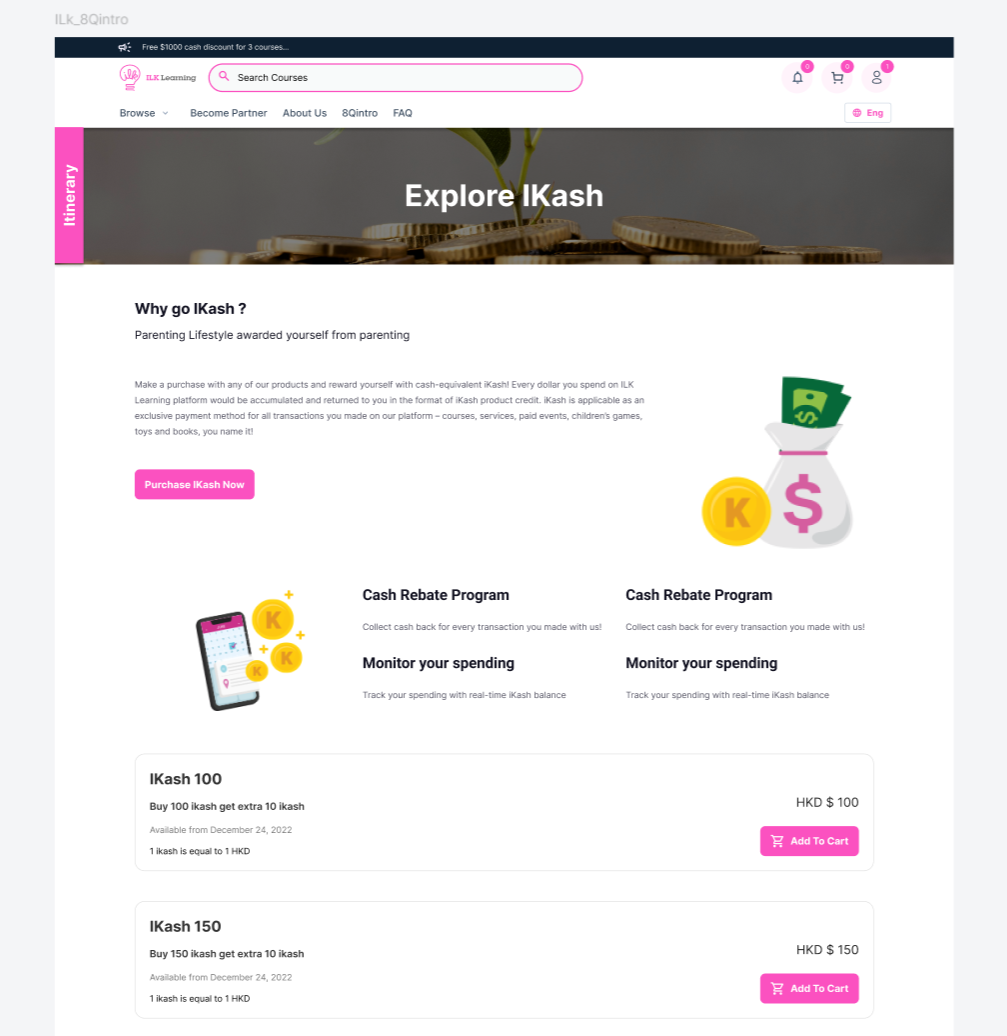
2. "iKash" Ecosystem & Wallet UI
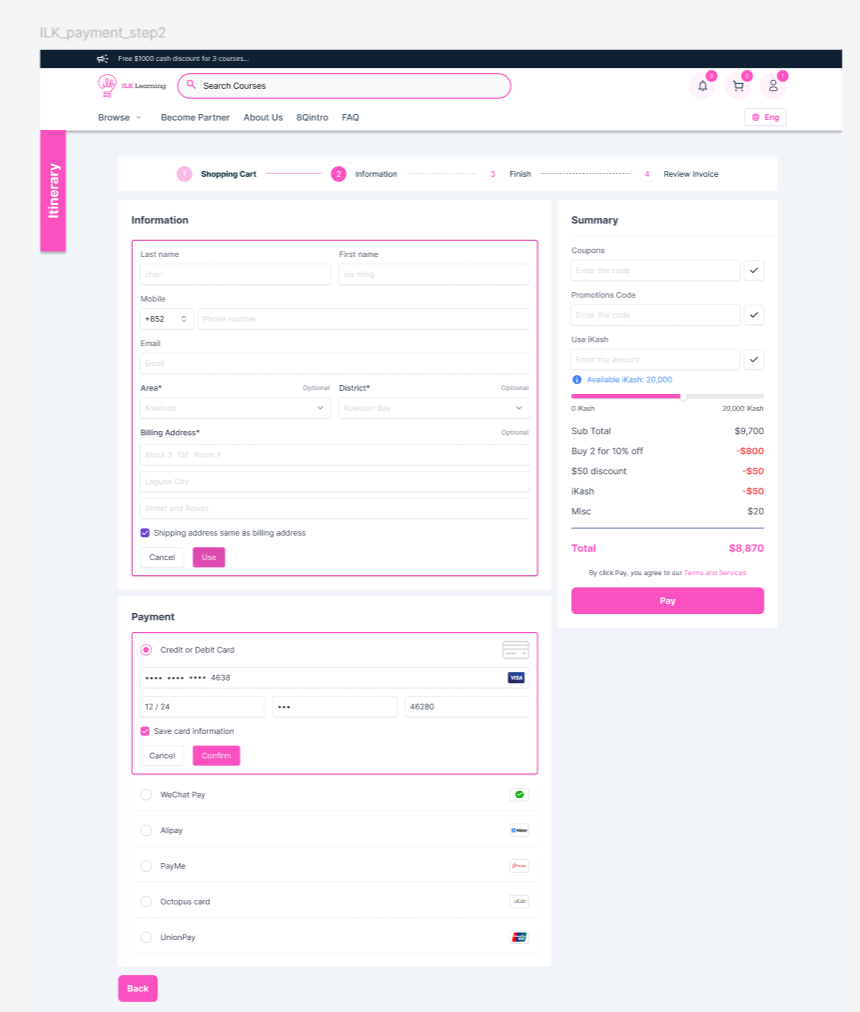
Created a gamified "iKash" credit system that rewards parents for bookings and referrals.
Result: The wallet dashboard reduced friction for repeat purchases, as parents could "top up" credits (via FPS/PayMe) and book instantly without entering card details every time.
Taxonomy Design: Collaborated with educators to map 500+ courses to the "Quotients" framework. We card-sorted terms like "Survival Skills" vs. "Adventure" to ensure parents understood the value proposition.
Checkout Optimization: Integrated local payment habits. User testing showed that adding FPS (Fast Payment System) reduced checkout drop-off by 20% compared to credit-card only flows.