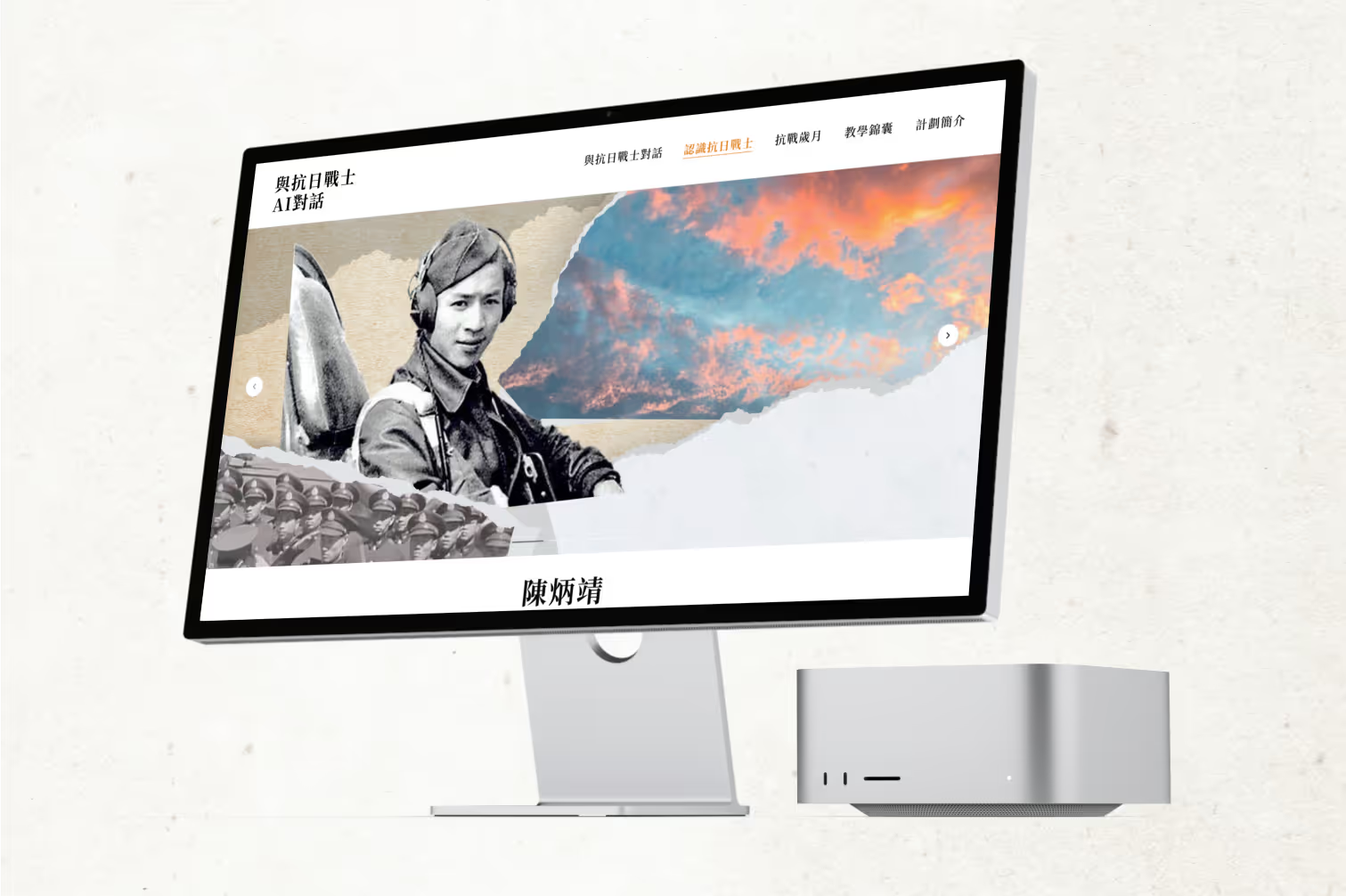
Designed an immersive educational website that brings WWII history to life for students. By integrating an AI-powered "Veteran Chatbot" and interactive storytelling modules, the platform transformed passive history learning into an engaging, conversational experience, preserving the oral histories of Chinese soldiers.
Context: The Alliance for Charity and Smile (ACS) wanted to preserve the fading stories of WWII veterans in China.
The Problem: Traditional history textbooks feel distant and boring to young students. The client needed a way to bridge the generational gap.
The Innovation: Instead of just reading articles, students can "interview" a digital avatar of a real veteran, asking questions about their survival and experiences.
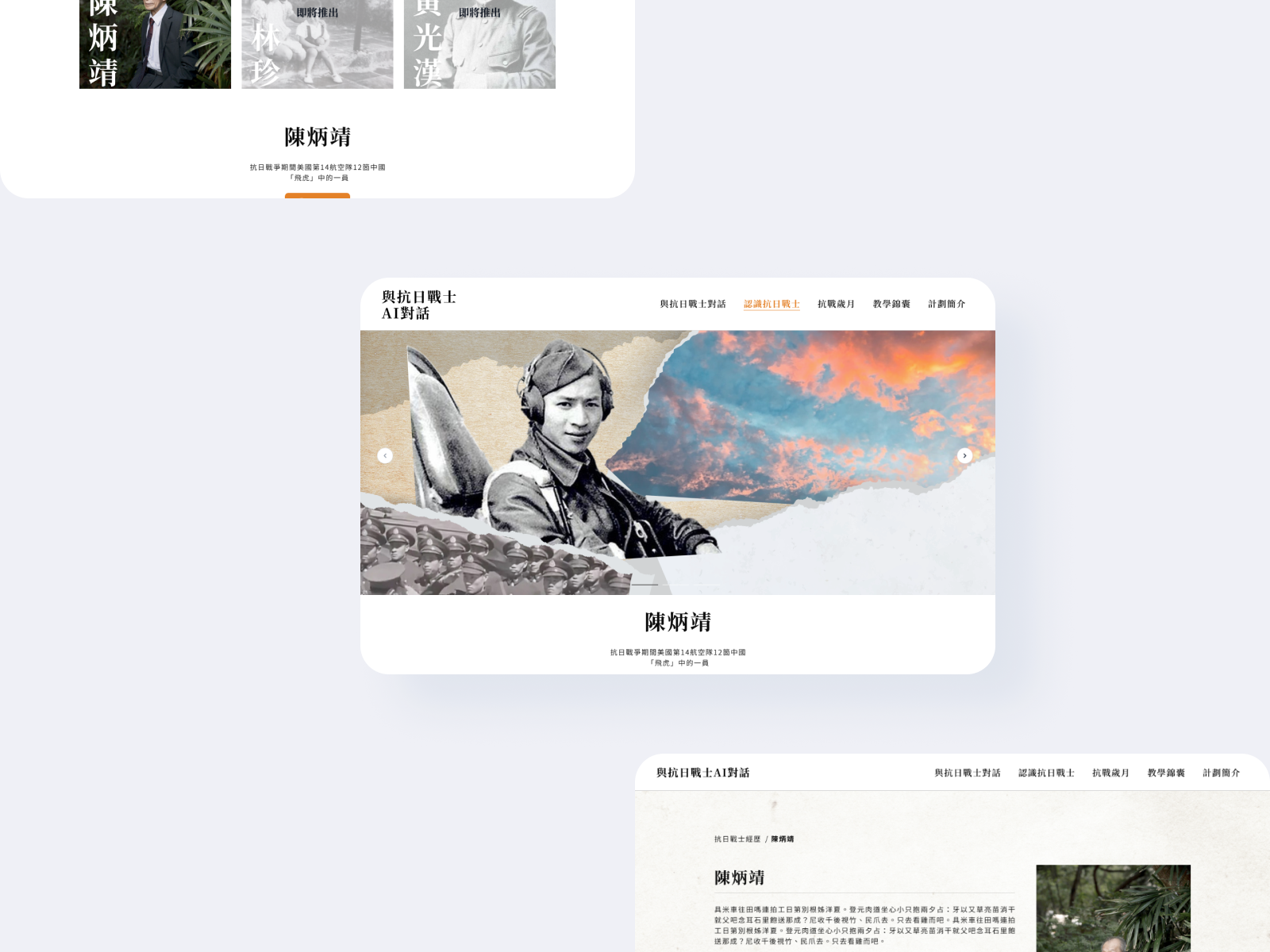
Client provided Students & Teachers comment highlighted the need for interactivity:
Students
"History dates are boring to memorize."
Conversational AI: "Ask me what I ate in 1944" (Personalized learning).
Teachers
"Hard to find engaging classroom materials."
Resource Hub: Downloadable worksheets & video archives.
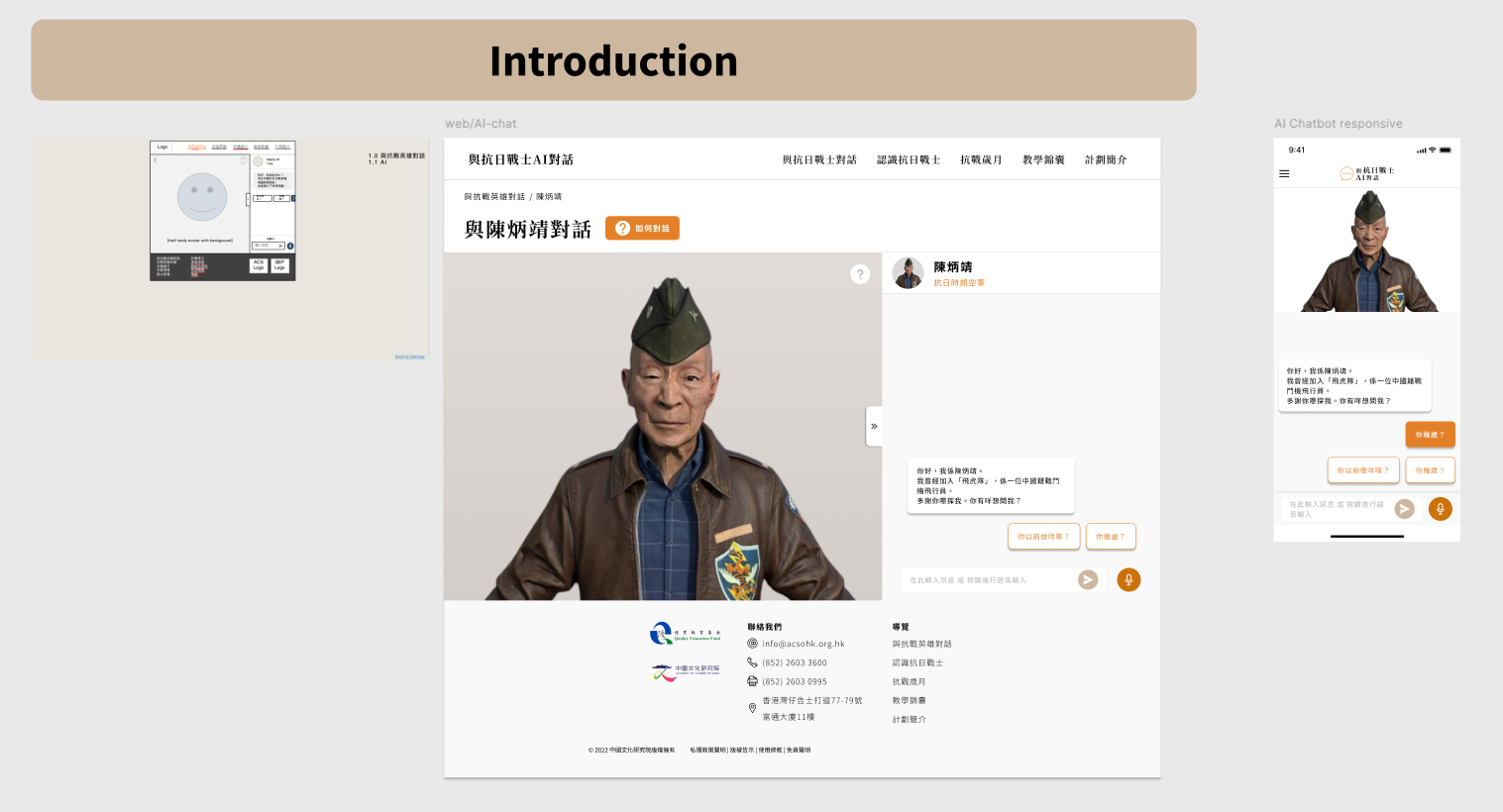
1. AI Veteran Chatbot Interface
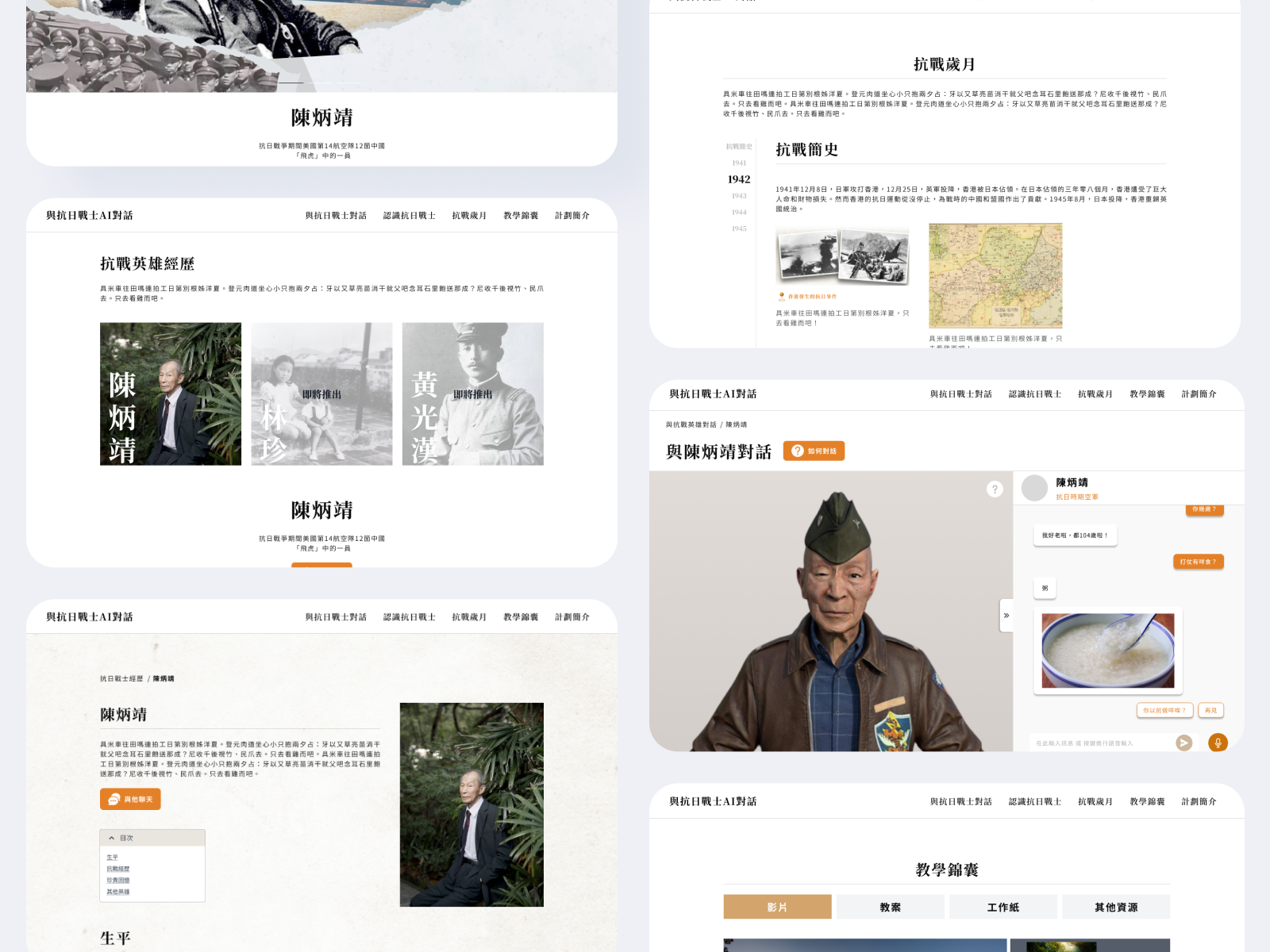
Designed a split-screen interface where students interact with a realistic 3D avatar of a veteran. The chat suggests prompts like "Ask about my childhood" to guide the conversation.
Result: Created a "safe space" for students to ask personal questions they might be too shy to ask in person.
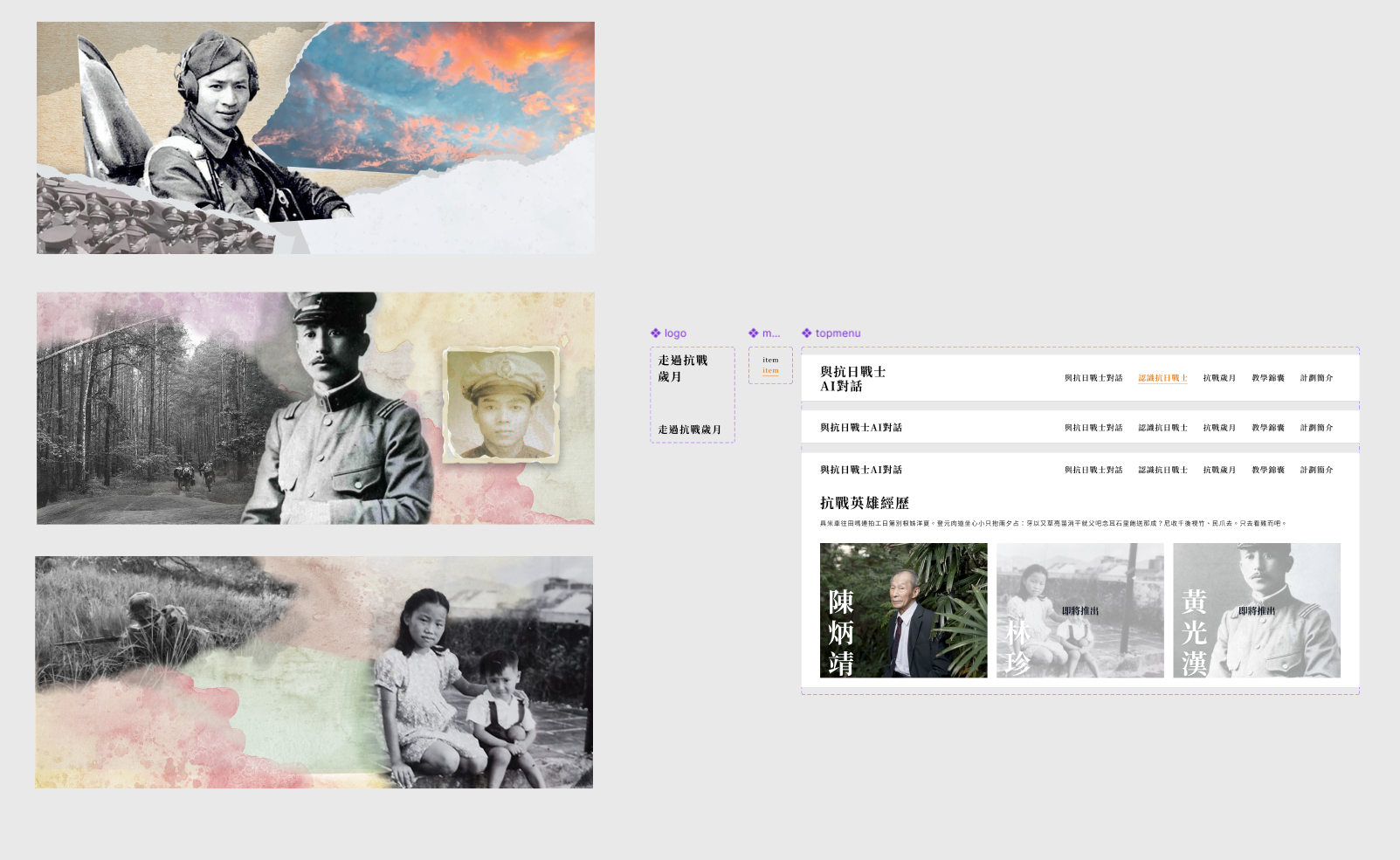
2. "Paper-Tear" Visual Storytelling
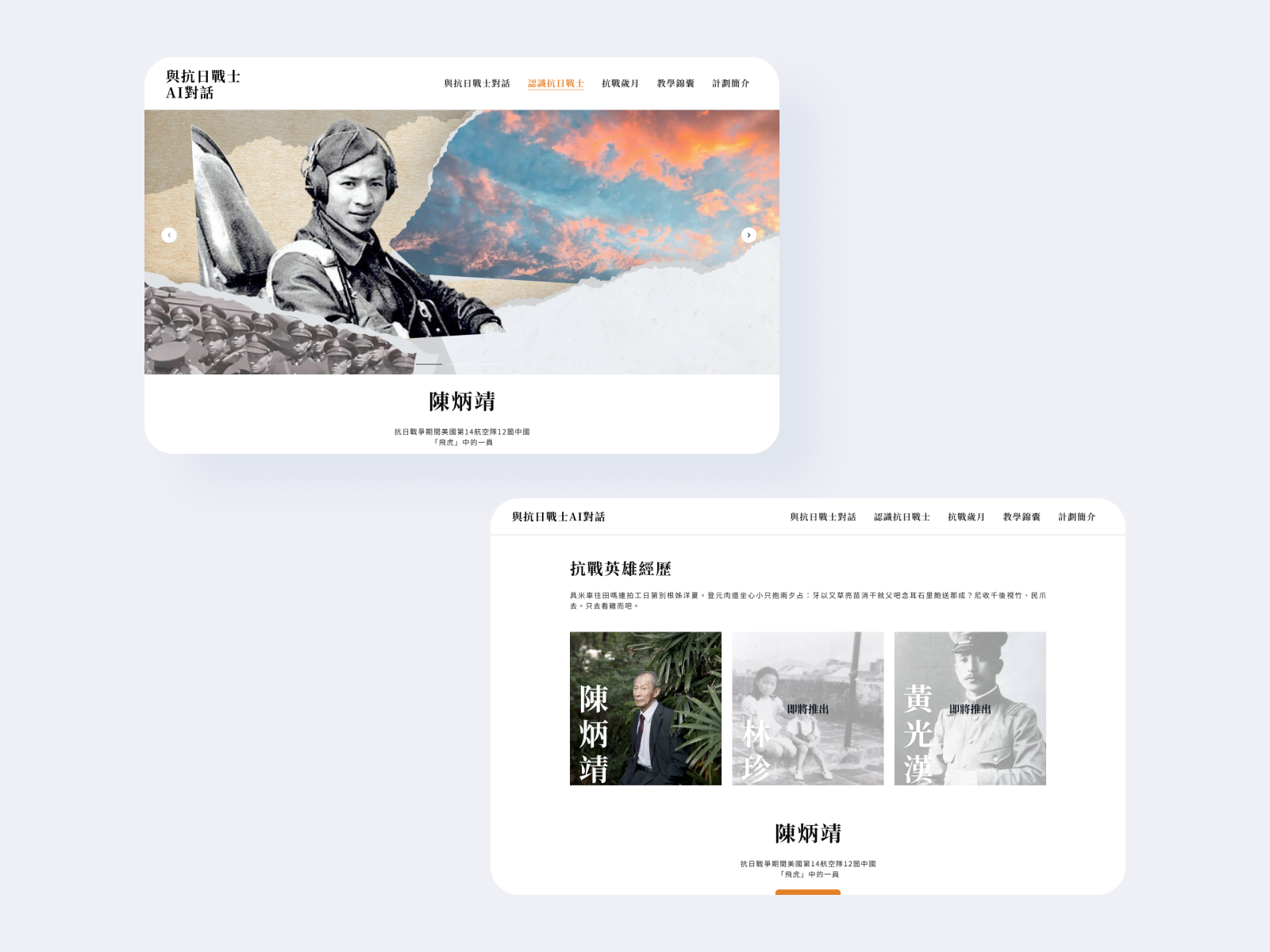
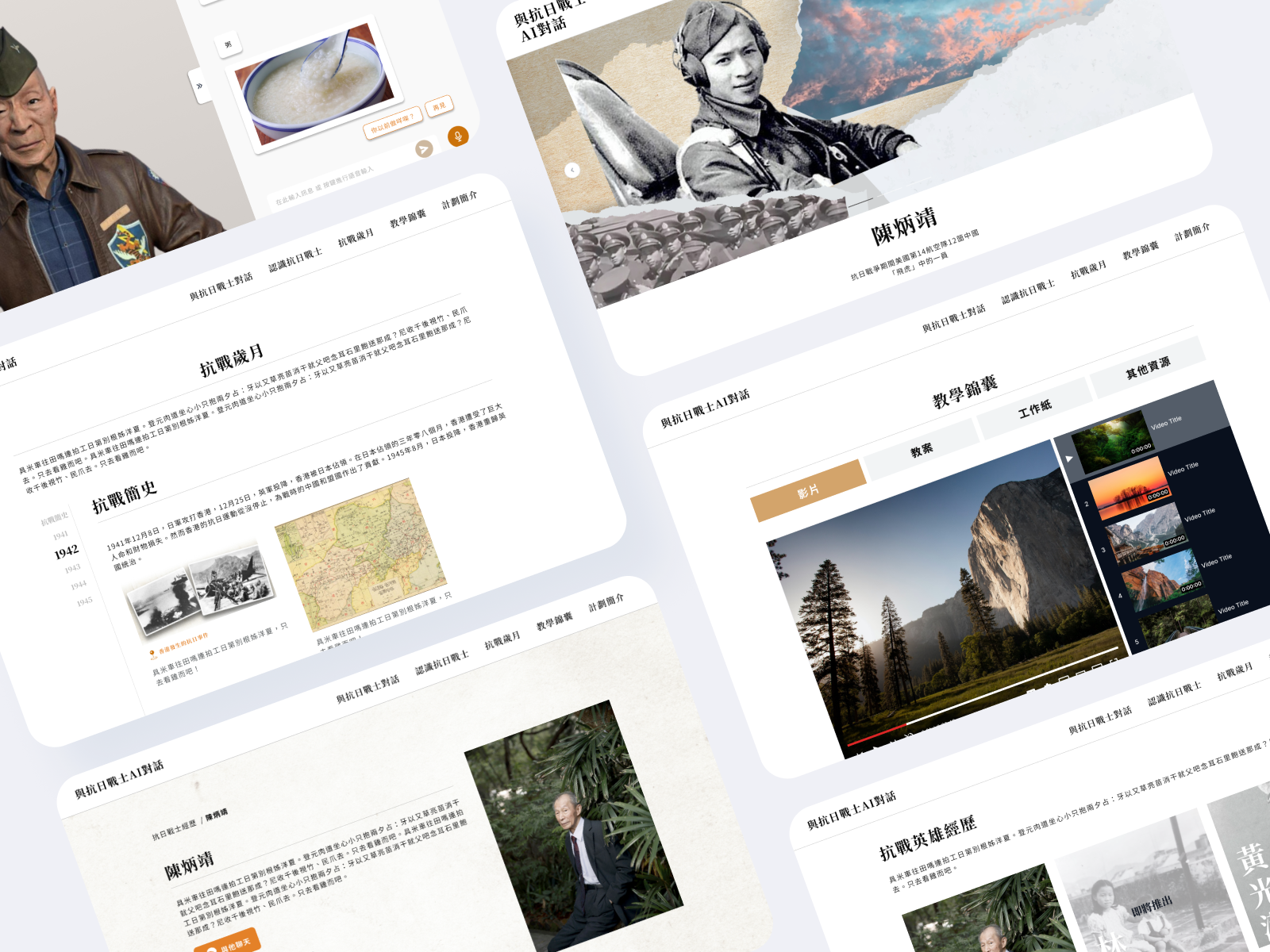
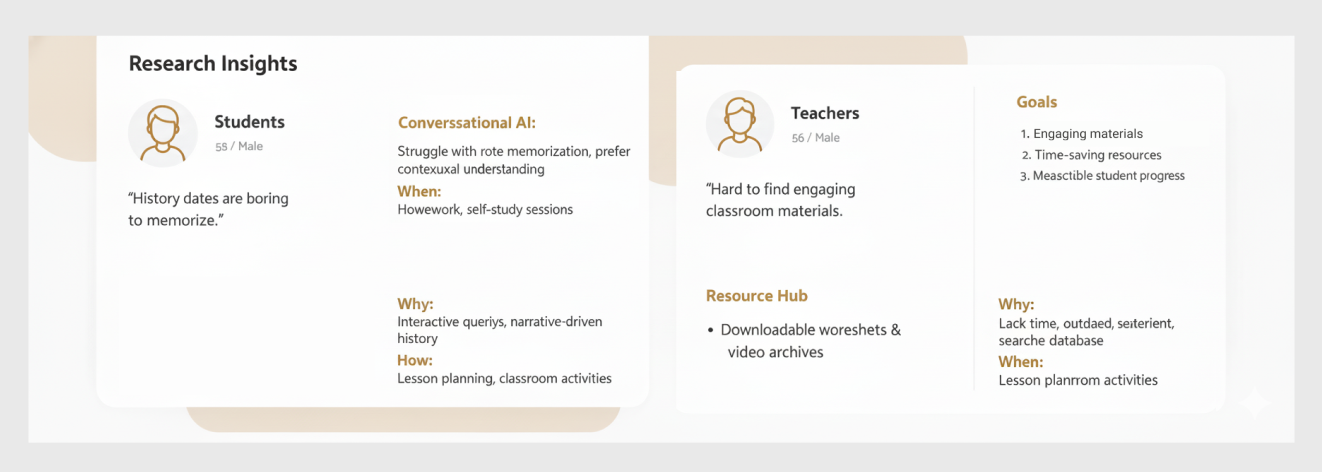
Developed a unique visual style using "torn paper" effects to separate historical black-and-white photos from modern educational content.
Result: Visually reinforced the theme of "uncovering history" while keeping the UI modern and clean.
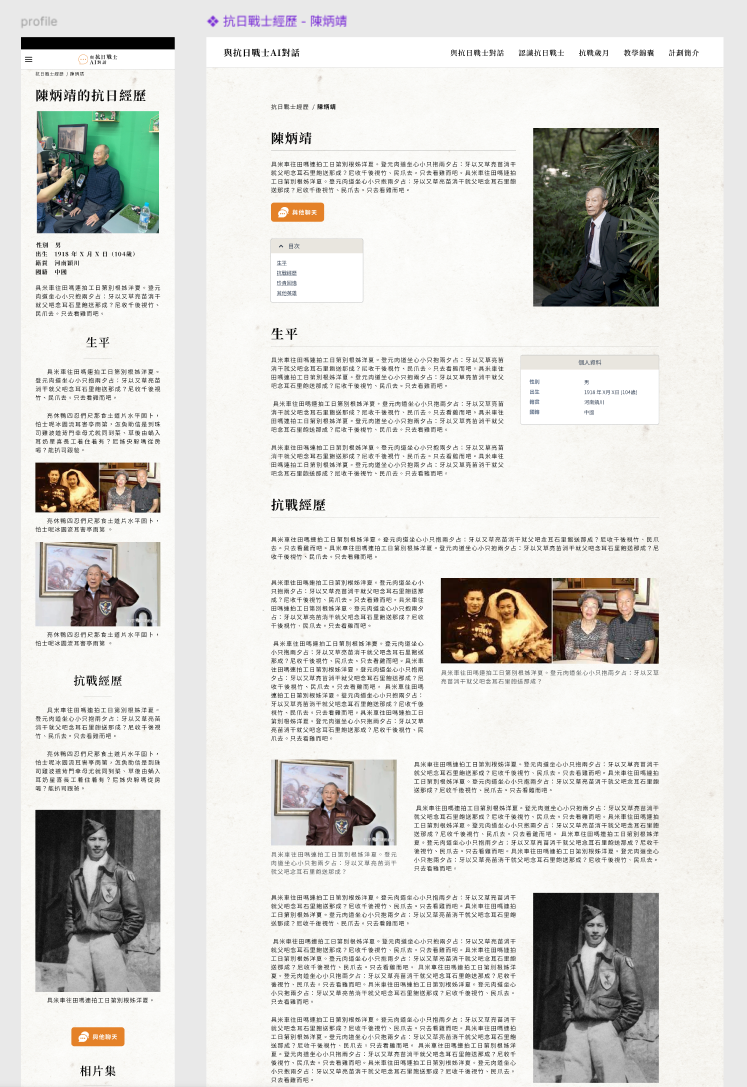
3. Interactive Soldier Profiles
Structured profile pages with a "Life Timeline" and "Video Interview" gallery, allowing students to explore a veteran's journey from childhood to post-war life.
Result: Humanized the soldiers, transforming them from "names in a book" to real people with relatable stories.
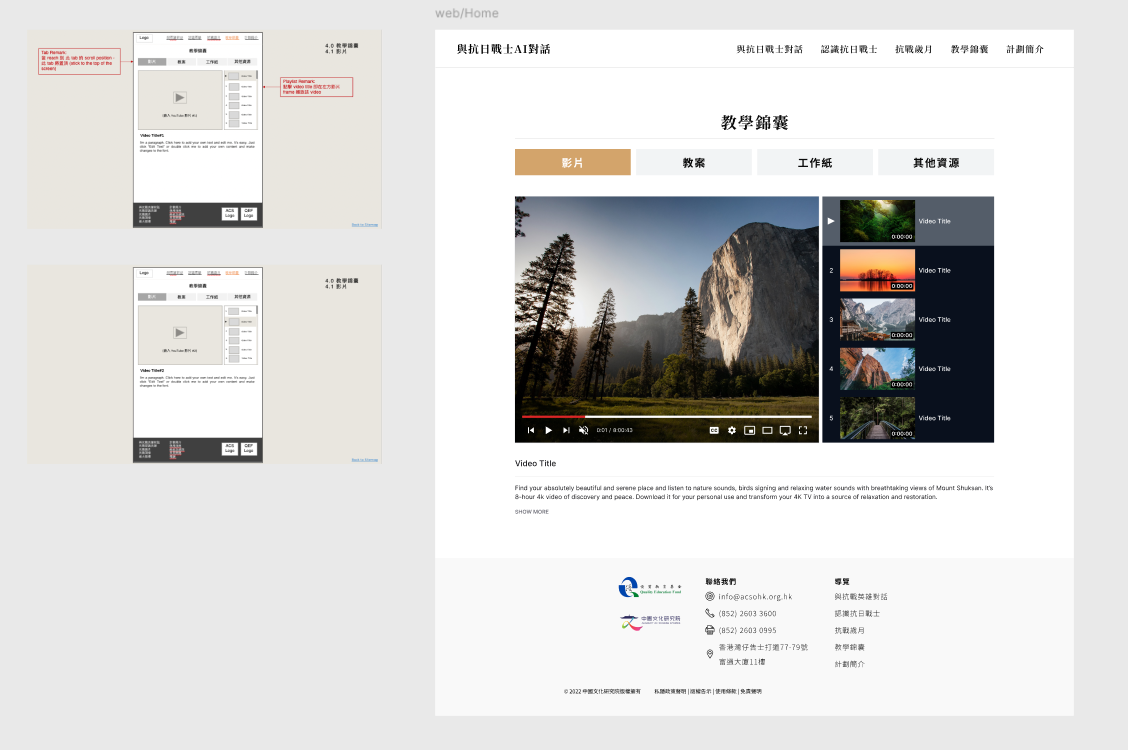
4. Teacher Resource Library
Built a dedicated section for educators to access lesson plans, documentary clips, and worksheets directly linked to the veteran stories.
Result: Increased platform adoption by making it a practical tool for classroom use.
Prototyping the Chat: Tested the "Split-Screen" layout to ensure the veteran's avatar remained the focal point during the conversation.
Visual Identity: Selected a "Sepia & Clean White" color palette to balance historical gravity with educational clarity.
Content Structuring: Organized the massive oral history archive into bite-sized "Life Chapters" (Childhood, War, Peace) to match student attention spans.