Background
A comprehensive UX/UI redesign of an enterprise HR and business management platform addressed key usability issues leading to customer dissatisfaction. Through research, iterative design, and a new design system, the project attracted 10+ new enterprise clients within three months and boosted user satisfaction by 43%.
The Challenge
The platform, despite its comprehensive features like HR management and attendance tracking, was losing market share due to usability and aesthetic issues, not missing functionality. Sales had been declining for two years, with customer feedback highlighting these concerns.
Why It Mattered
The company aimed to enhance the product's appeal to attract new customers and simplify usage for existing ones, necessitating a complete redesign rather than just adding features.
Project Scope
My Role:
UX & UI Designer (from research to delivery)
Timeline:
4 months (research and discovery: 3 weeks; design and iteration: 6 weeks; handoff and launch: 3 weeks)
Tools:
Figma (design and prototyping), Miro (collaborative ideation and journey mapping)
Deliverables:
Redesigned core user flows, comprehensive design system, 12+ high-fidelity screens, interactive prototypes for usability testing
Research Insights
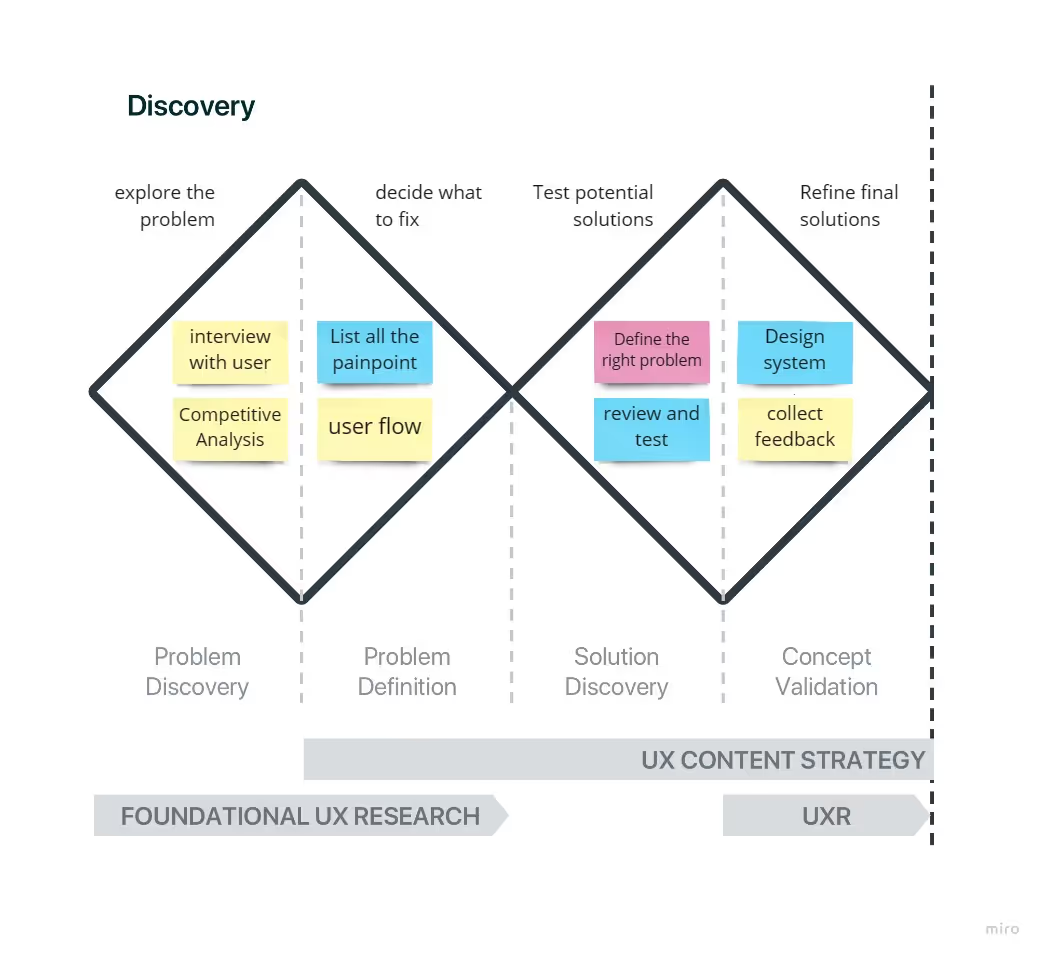
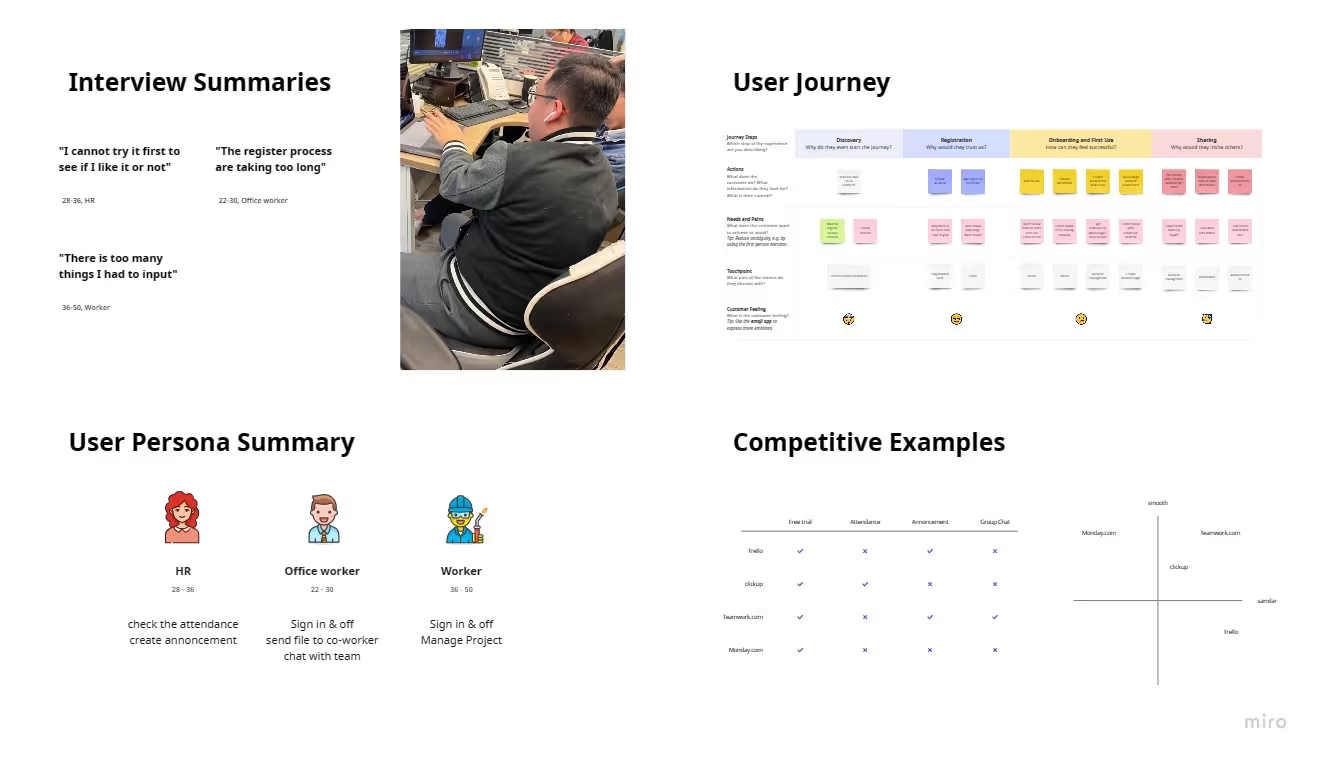
10 user interviews + 247 support tickets + competitive analysis, revealed 5 critical problems:
Key Findings:
1. Signup Friction
73% of new users needed support to complete signup; 12+ field form
→ High churn before users even enter product
2. Onboarding Confusion
Users spent 45 min finding core features; no guidance provided
→ Users couldn't derive immediate value
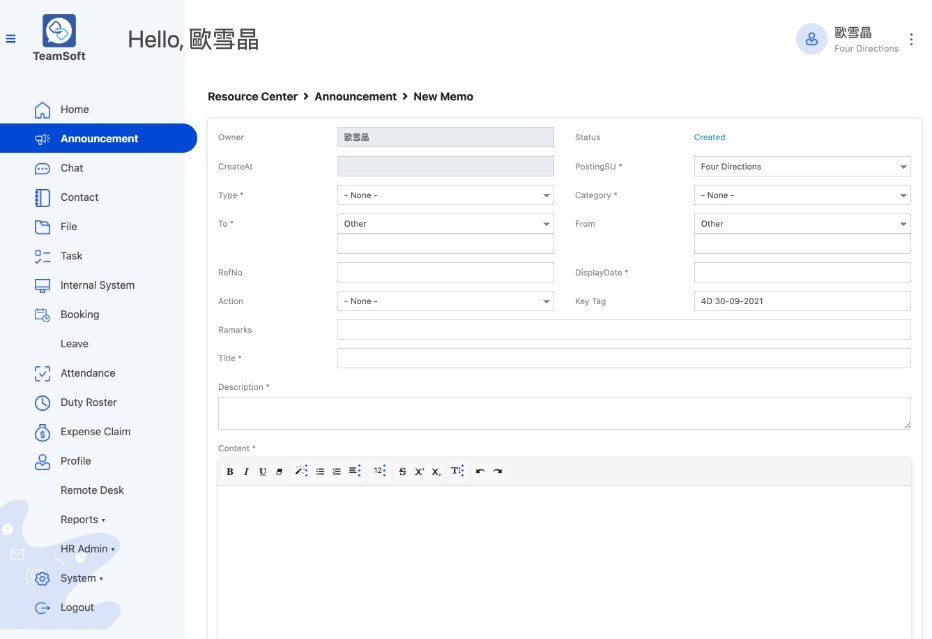
3. Visual & IA Issues
58% missed critical buttons; inconsistent spacing; dated aesthetic
→ Poor product perception &credibility
4. Navigation Problems
3.2 clicks avg. to find core features; unclear labels
→ Low feature adoption; high support burden
5. Business Model
Perpetual licensing vs. competitors' trials; 40% of prospects dropped off
→ Lower conversion vs. benchmarks
Design Solutions
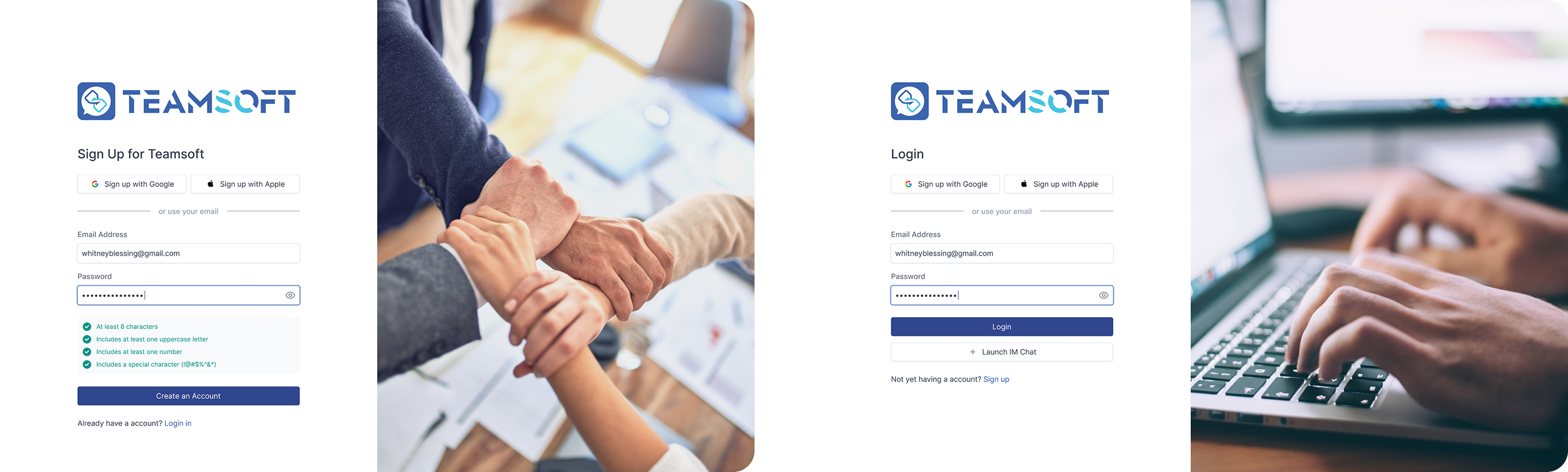
1. Signup Friction → Multi-Step Flow
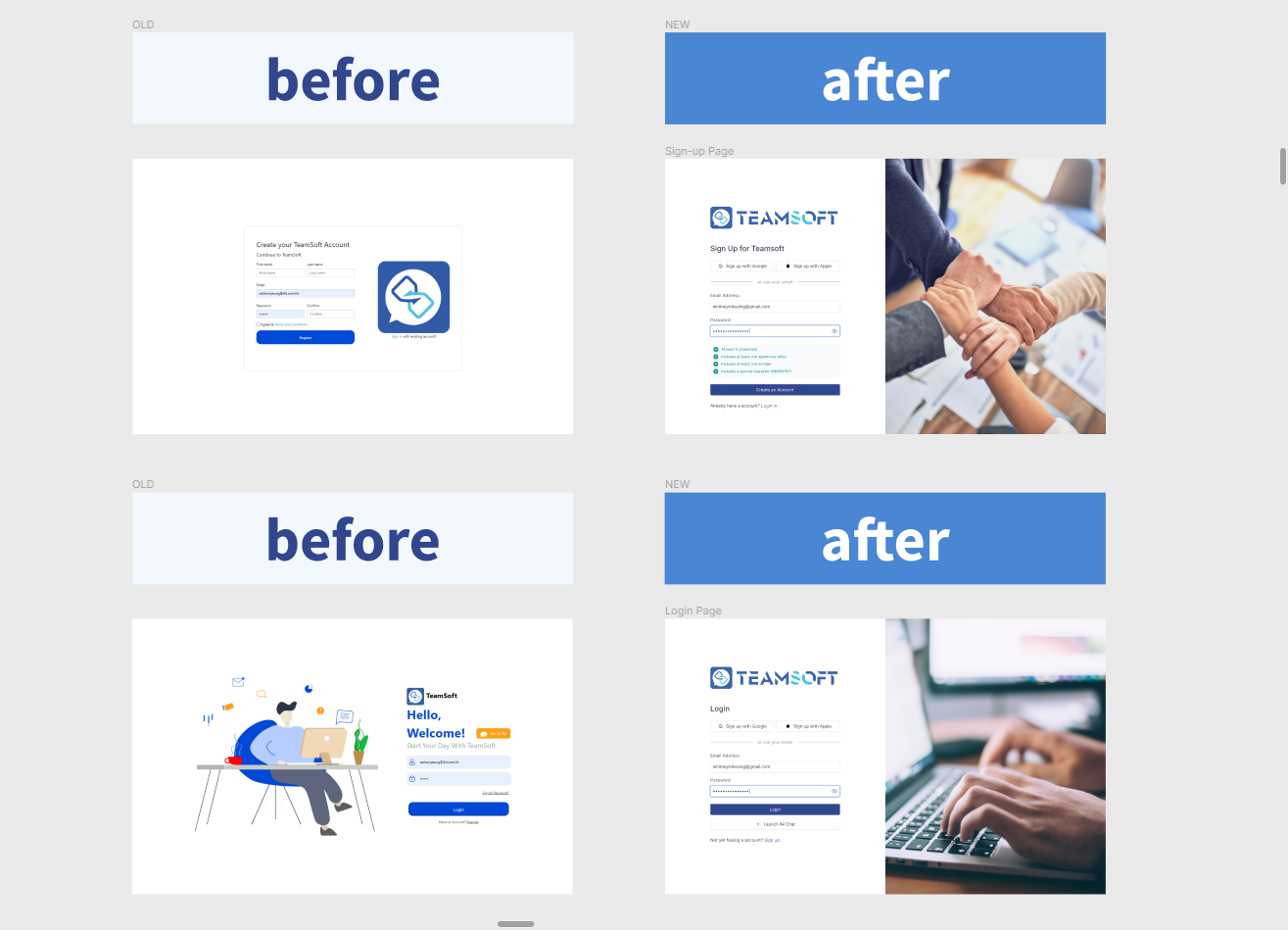
12-field form → 4-step journey (2-3 fields/step).
Testing showed: 4-step flow 100% completion vs. 40% for single-page form
Result: 66% faster signup (12 min → 4 min)
2. Onboarding Confusion → Animated Guidance + Video
3-screen animation + 2-min demo. Testing: 7/8 watched full video.
Result: 78% onboarding completion (+44%), 88% faster feature discovery
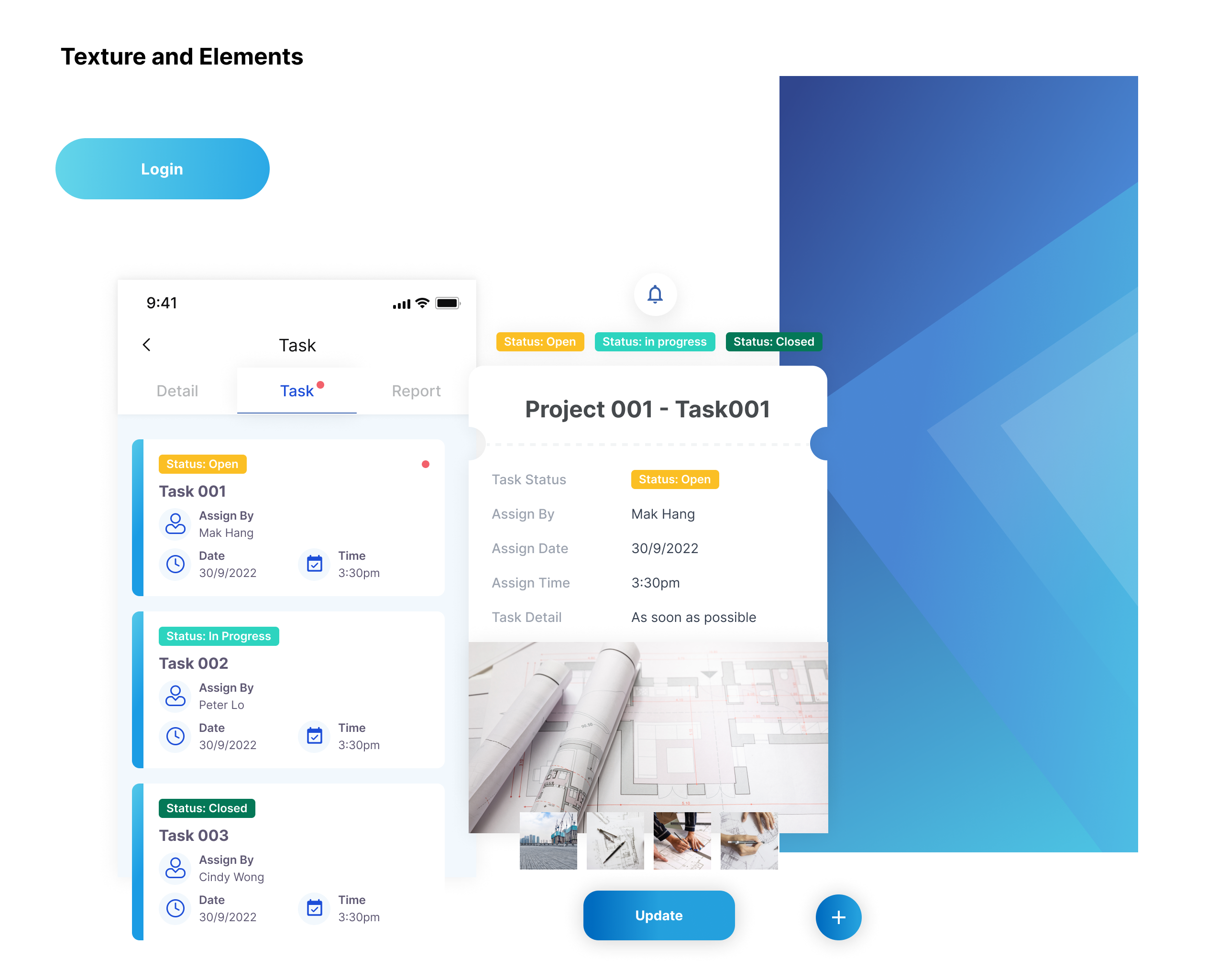
3. Outdated UI → New Design System
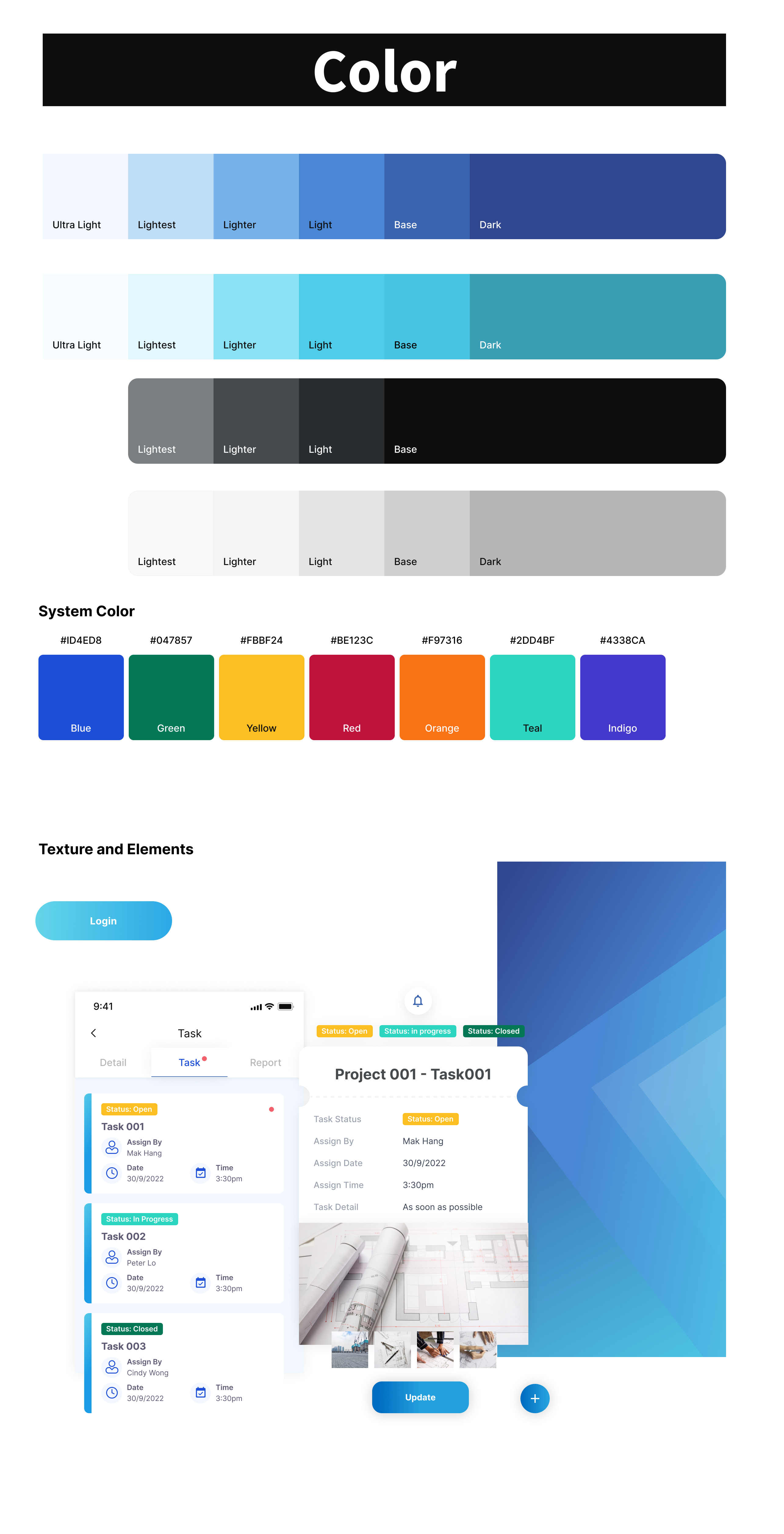
Built design system with 47 reusable components, dark theme (80% of competitors use), standardized spacing (8px grid).
Result: 40% faster design-to-dev handoff, improved accessibility (+23% readability)
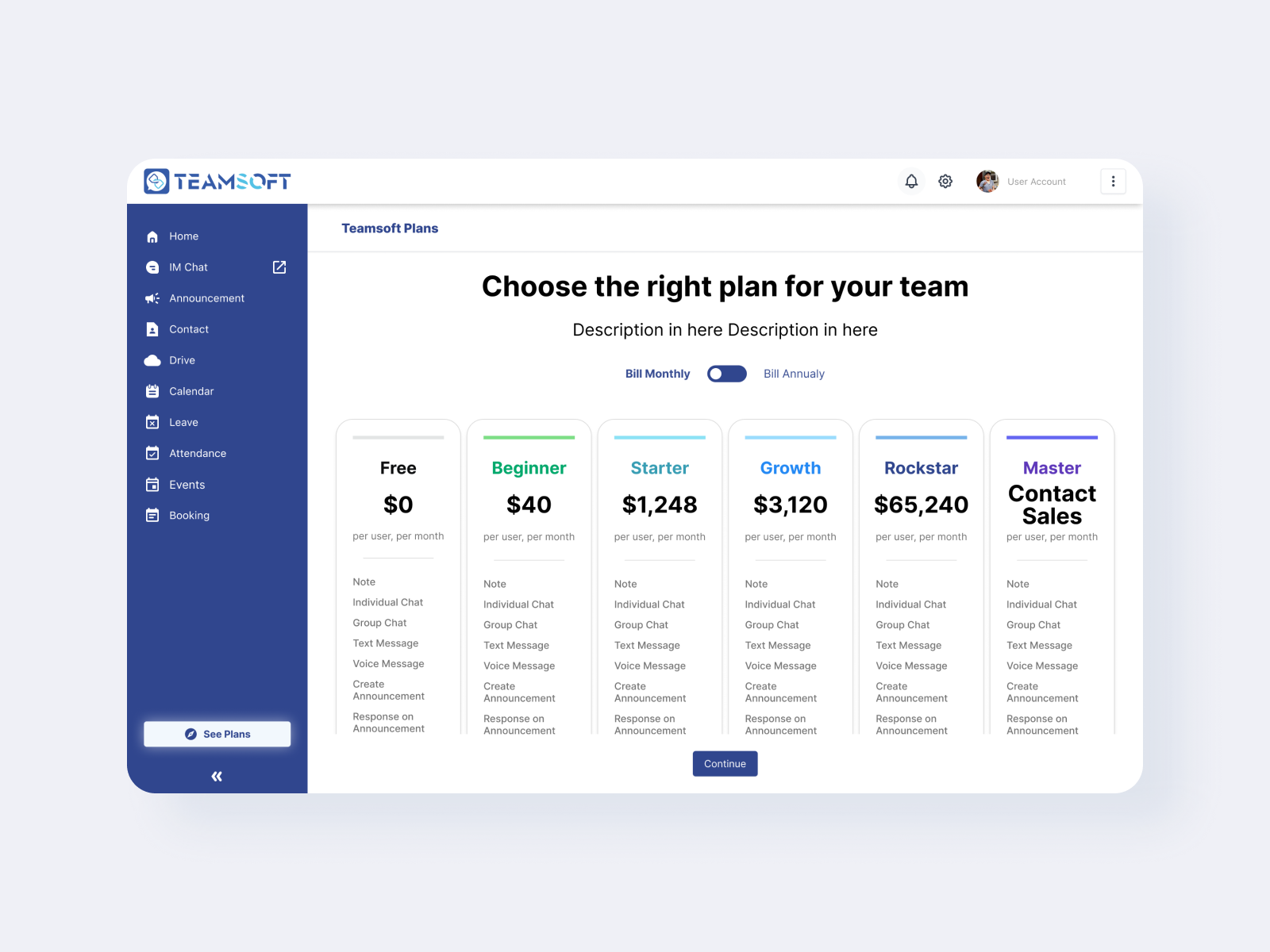
4. Business Model → SaaS + Free Trial
14-day trial (no CC). Removed 40% prospect barrier.
Result: 156%+ in trial signups, 38% trial-to-paid conversion (+26% vs. previous model)
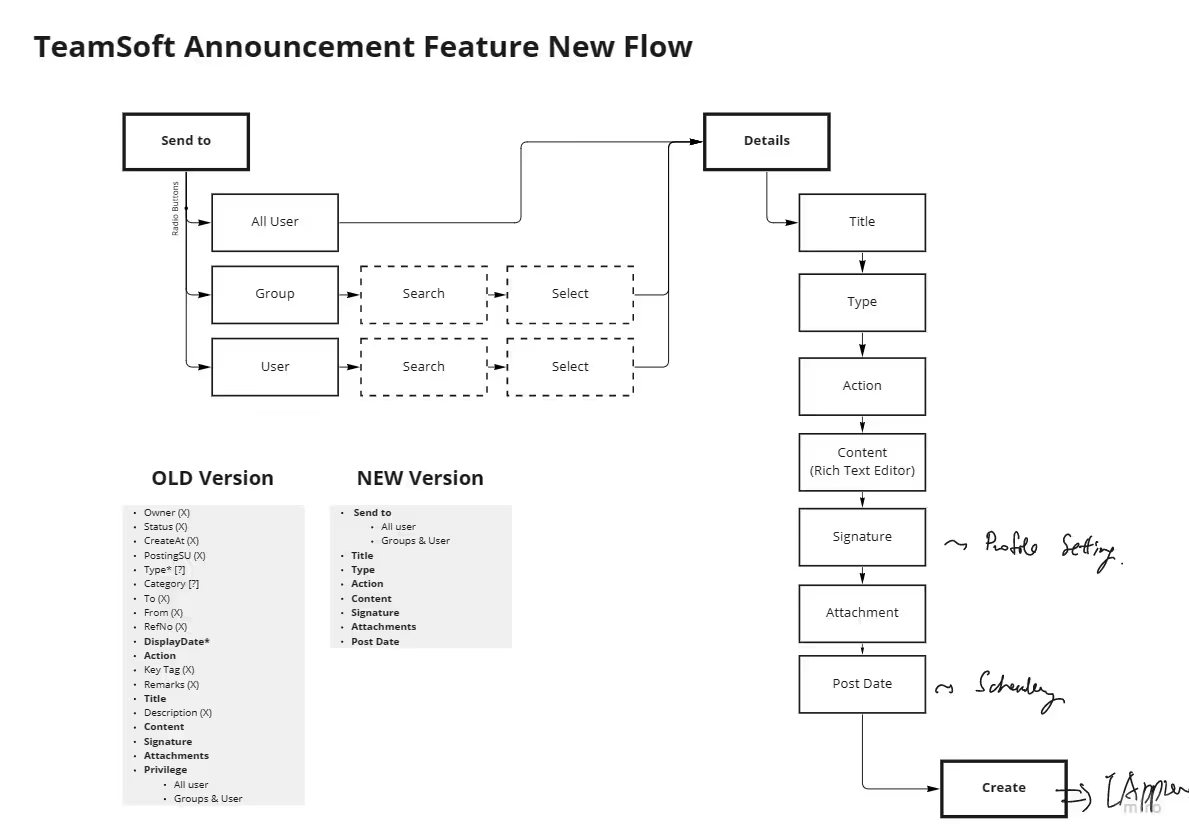
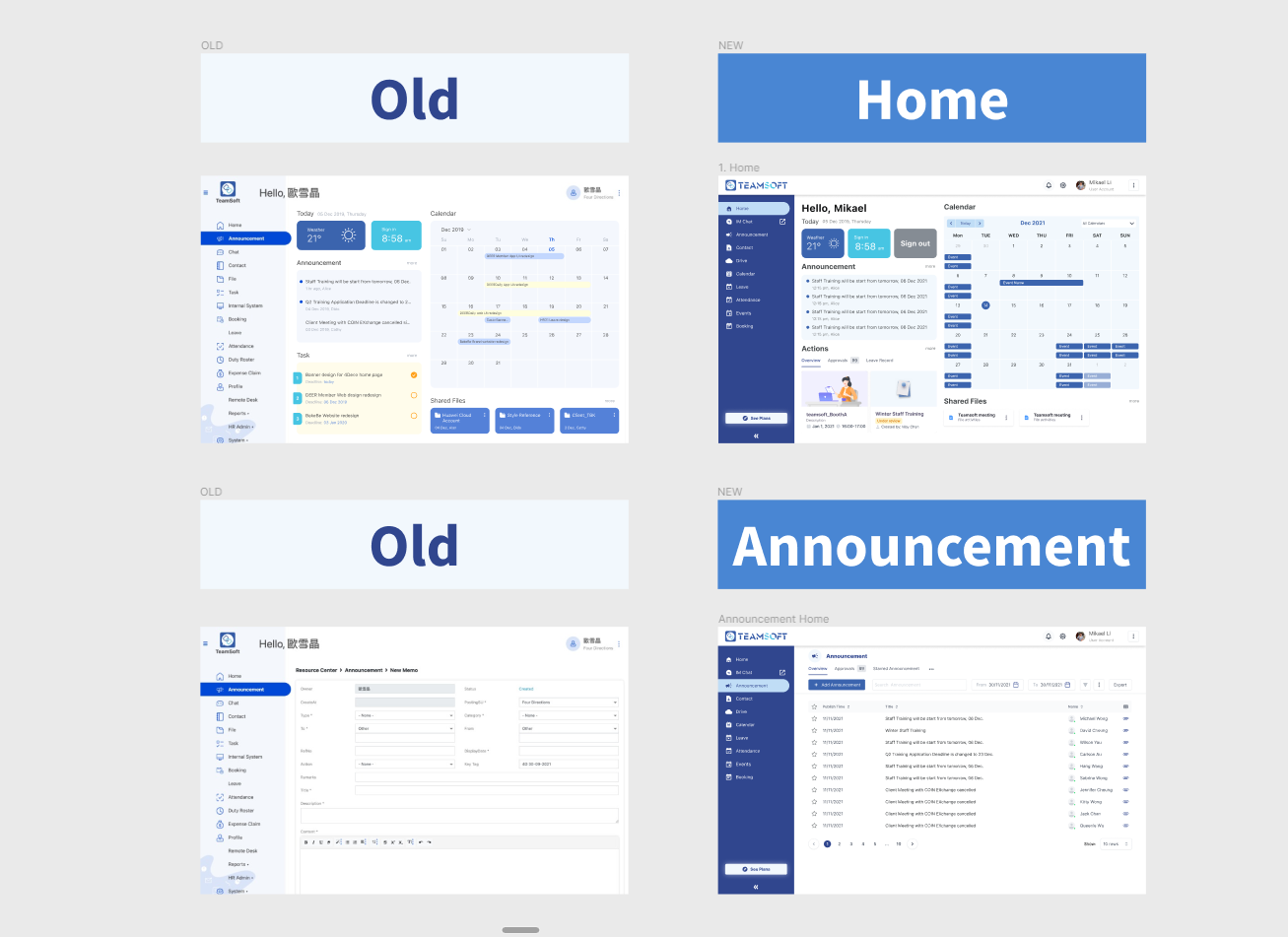
5. Poor Navigation → Clear Information Architecture
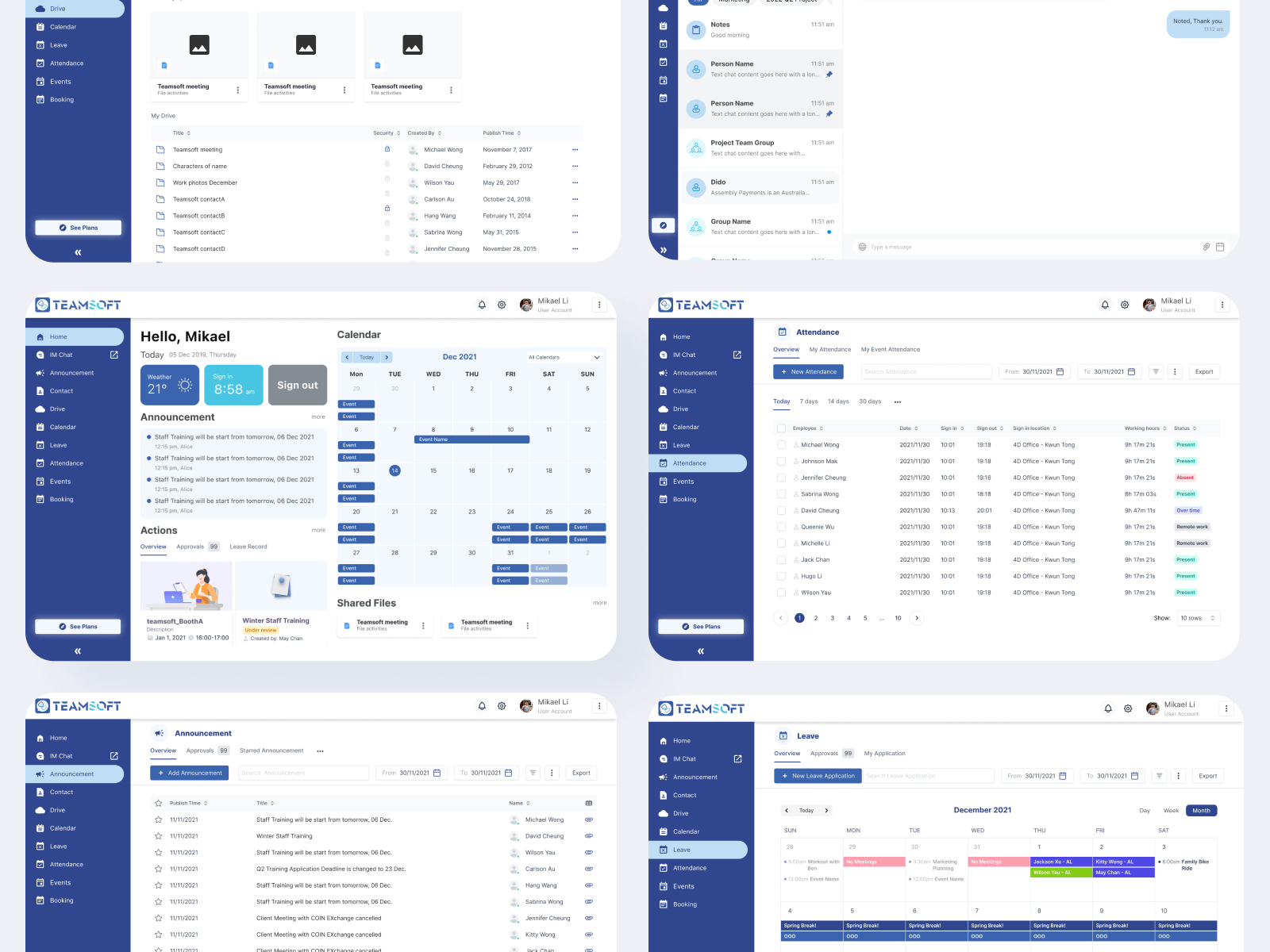
Redesigned navigation with action-oriented labels, persistent sidebar, breadcrumbs.
User testing: 3.2 → 1.1 clicks to core features.
Result: 65% fewer clicks, 42% higher feature adoption
Process & Validation
Create Design
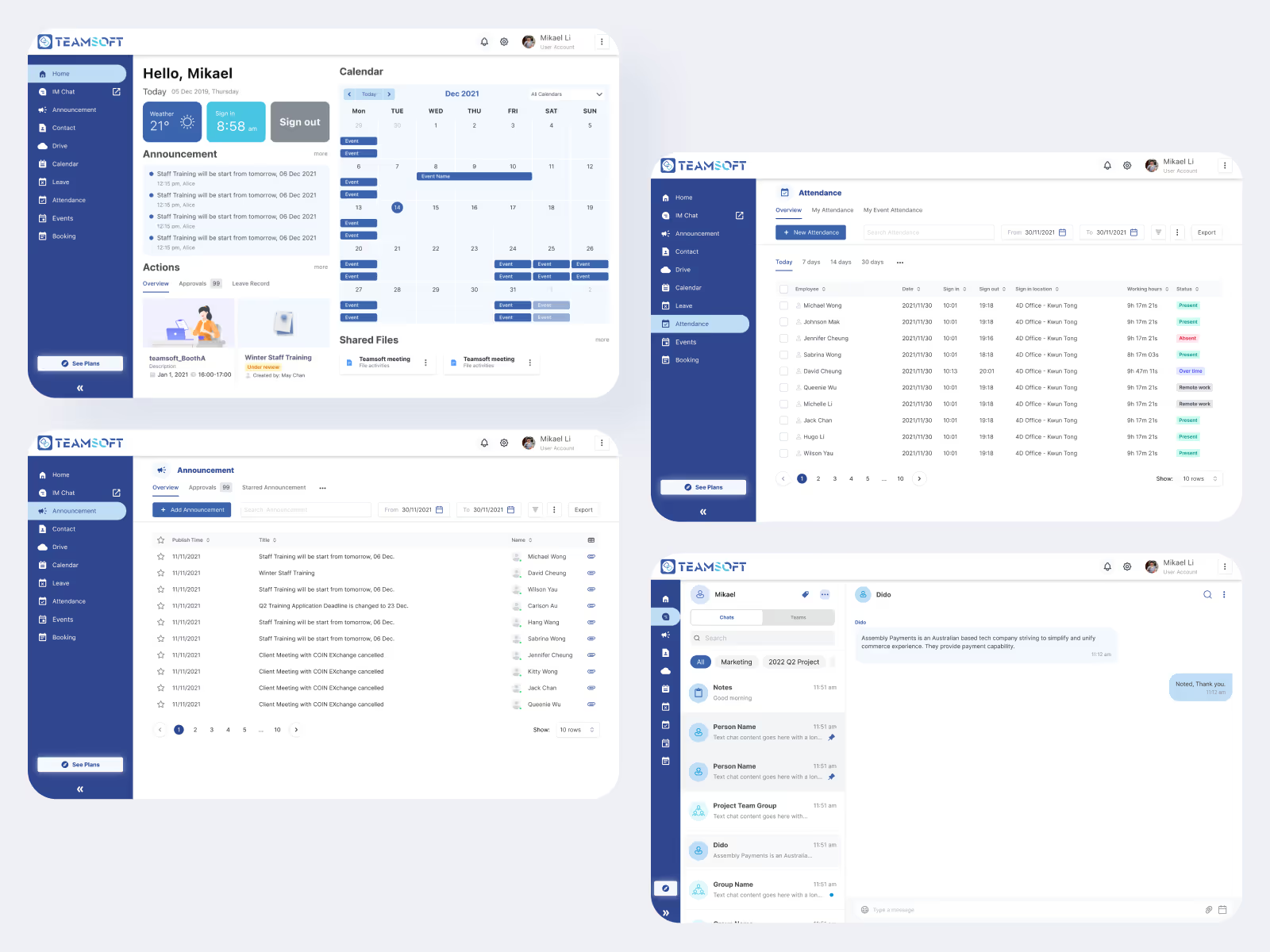
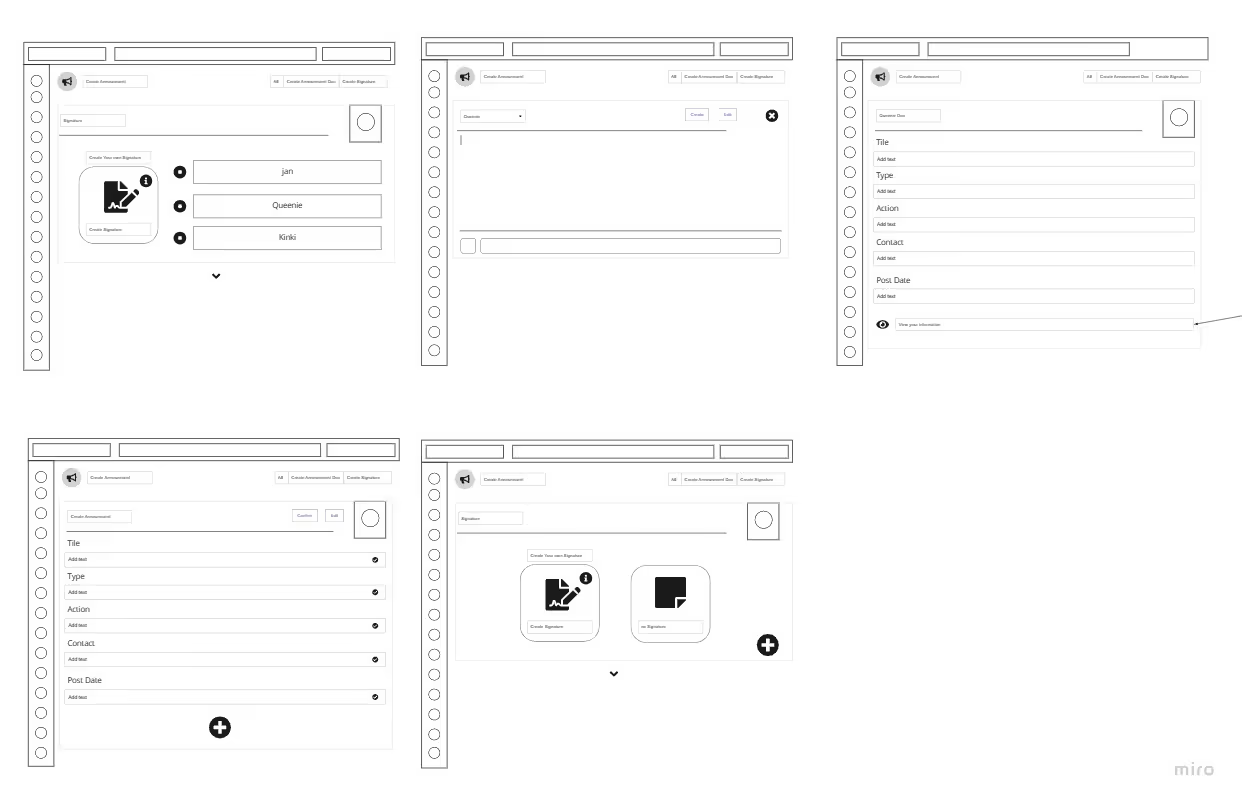
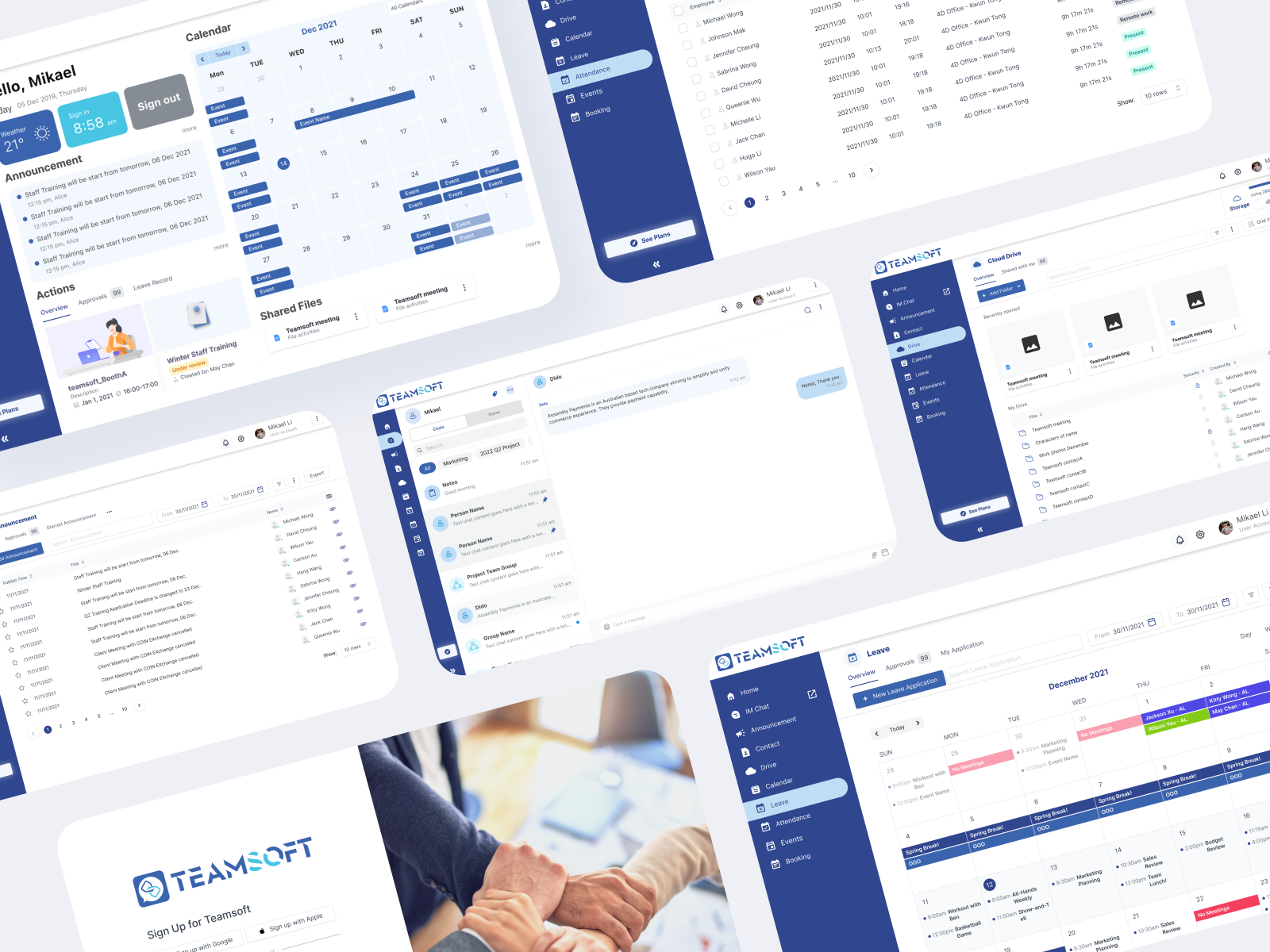
HiFi: Designed 12+ screens (login, dashboard, attendance, etc.).
Created interactive prototypes in Figma with transitions and animations.
Design System: 47 components fully documented for dev handoff
User Testing (3 Rounds)
Signup: 5 users tested; 100% completion vs. 0% on previous version
Navigation: 6 users tested; 6/6 completed tasks on first attempt vs. 2/6 previously
Mobile: 4 field users tested; all completed without assistance
Before & After
Launch & Results
User Acquisition & Retention
New client acquisition: 10+ enterprise clients (construction and manufacturing companies)
This represented a 2x increase vs. previous quarterly average
Trial-to-paid conversion rate: 38% (3x increase vs. 12% under previous model)
Onboarding: 78% completion (+44%)
Customer satisfaction score (CSAT): 4.6/5 (+43% vs. 3.2/5 pre-redesign)
New Features Post-Launch
• Mobile attendance check-in
• Real-time project tracking
• Auto-reports
• All three features drove adoption in construction/manufacturing verticals
Key Takeaways
What Worked:
Multi-method research justified every decision. Early testing caught issues. Design system accelerated future work.
What I'd Do Differently:
• Share research earlier with stakeholders
• Plan 1-2 weeks post-launch iteration
Skills Gained:
Research methodology, design systems, stakeholder communication, business impact thinking
